Lesson 04 — Singing and Clapping
Learners clap and sing a simple rhythm, echo patterns, and keep a steady beat together. Rhythm is made with the body itself, anywhere in the world.
Objectives
Objectives
- D07.S2.K.01 Sing, clap, or play a simple rhythm and say how it makes them feel.
Essential question
How do I make a rhythm with my voice and hands?
Key vocabulary
Materials
Standard materials
- Hands and voices · everyone The only true instruments needed
- A simple clapping or tapping rhythm · 1 pattern A short pattern the group can echo
Low-tech / no-cost
- Body percussion Clap, pat knees, tap chest — no objects needed
- Sticks, stones, or a pot Tap a steady beat on whatever is near
Enriched / lab & device
- Shakers or drums · 1 per learner or pair Homemade or store-bought instruments to keep the beat
- A simple song recording · 1 device A familiar children's song to clap along with
Works in different contexts
- large-group Lead call-and-response — the group echoes each short clap pattern back together; keep patterns short and visible
- multi-age Older learners lead a clap pattern while younger ones echo; switch leaders so everyone gets a turn to lead
- self-directed A learner invents a short clap-and-sing pattern, does it a few times, and notices if they can keep the beat steady alone
- level-grouped Group by comfort with keeping time — some clap one beat at a time, others hold a full pattern — and match the challenge
- outdoor-only Use feet on the ground and hands on knees, or tap two stones together, to make a rhythm in the open air
Lesson 4 — Singing and Clapping
Summary
Learners make rhythm with nothing but their hands and voices. They echo simple clap patterns, keep a steady beat together, and invent their own. Rhythm belongs to everyone and needs no instrument at all.
Objectives
- Sing, clap, or play a simple rhythm and say how it makes them feel. (D07.S2.K.01)
Connection
Think of a song you know — maybe a lullaby, a clapping game, or a song you sing while working. In every part of the world, people clap, sing, and tap to keep a beat together. Your hands and your voice are an instrument you always carry with you.
Materials
- Hands and voices (the only true instruments)
- A simple clapping or tapping rhythm to echo
Preparation
- Choose one short clap pattern (for example: clap, clap, pat-knees) to teach as an echo.
- Arrange the group in a circle so everyone can see and hear.
Facilitator note
This lesson is written to the learner (“you”) so it works in a classroom and for a self-directed learner. As facilitator, keep patterns very short and repeat them many times. There is no “wrong” clap — closeness to the beat is something that grows. Let every learner lead a pattern if they want to; leadership in rhythm is for everyone.
Procedure
- Gather (5 min). Sit or stand in a circle. Pat your knees slowly. Can you feel a steady beat?
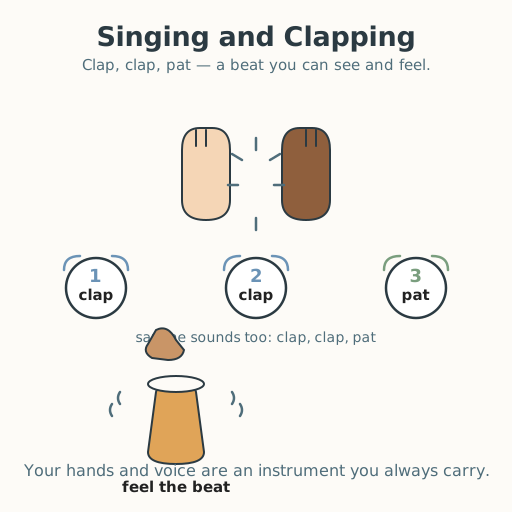
- Echo claps (10 min). Listen to a short clap pattern, then clap it back, just like an echo. Try a few different patterns. Say the sounds too — “clap, clap, pat.”
- Keep the beat (10 min). Sing a simple song you know, or a line of one, while you clap or tap the beat. Stay together, like one big heartbeat.
- Invent a rhythm (10 min). Make up your own short pattern. Teach it to a friend and clap it together.
- Close (5 min). Notice how the rhythm makes you feel — bouncy, calm, excited? Remember: you can make music with your own body, anywhere.
Differentiation
- Support: Echo one clap at a time, very slowly, and let the learner lead with a single beat.
- Deaf/HH path: Make the beat visible — clap and pat where everyone can see — and invite learners who do not hear to feel the beat as vibration by resting a hand on a drum, a tabletop, or the floor while others tap.
- Extension: Invite learners to layer two rhythms — one group keeps the steady beat while another claps a pattern over it.
Assessment
- Formative (observation): Does the learner clap or tap a simple rhythm and name a feeling it gives them?
- Performance: The learner’s echo or invented pattern, observed live.
Home connection
Teach someone at home a clap pattern and clap it together. Ask them how it made them feel.