Lesson 05 — How Music Feels
Learners listen to fast, slow, loud, and soft music and name the feeling each one gives them. Music moves the body and the heart, and it belongs to everyone.
Objectives
Objectives
- D07.S2.K.01 Sing, clap, or play a simple rhythm and say how it makes them feel.
Essential question
How does music make me feel?
Key vocabulary
Materials
Standard materials
- A way to make or play music · 1 A drum, a voice, a clap, or a simple song the group can sing
- Feeling face cards (reused) · 1 set Happy, sad, calm, excited faces to point to
Low-tech / no-cost
- Voice and body Sing fast and slow, loud and soft, and feel the difference; no objects needed
- A pot, box, or stones Tap a soft or loud, fast or slow beat on anything near
Enriched / lab & device
- A short music recording · 1 device Two contrasting short pieces — one lively, one gentle — to listen and respond to
- Colored scarves · 1 per learner Move the scarf fast or slow to show how the music feels
Works in different contexts
- large-group Play or sing each feeling of music and have the whole group raise a feeling card and move together to match
- multi-age Older learners can choose "fast or slow, loud or soft" to lead; younger learners move and point to the feeling
- self-directed A learner sings or taps a fast, then a slow, then a soft sound and points to the feeling face each one gives them
- level-grouped Some learners focus on one contrast (fast vs slow); others hold two at once (loud and fast) — match the listening task
- outdoor-only Listen to the sounds outside — birds, wind, water — and decide together if each feels fast or slow, loud or soft, calm or exciting
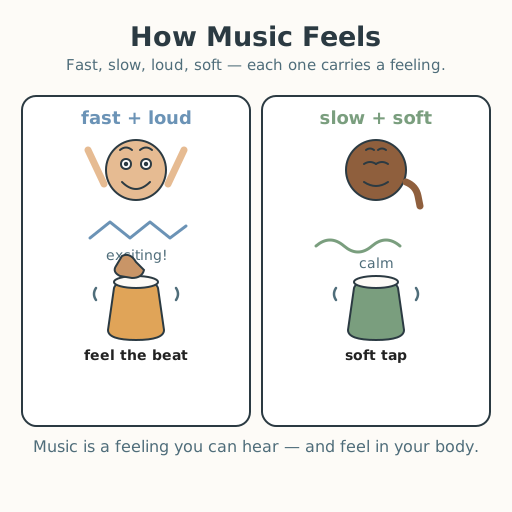
Lesson 5 — How Music Feels
Summary
Learners discover that music changes how they feel: fast and loud can feel exciting, slow and soft can feel calm. They make and listen to different kinds of sound and name the feeling each one brings, with words, a face, or a movement.
Objectives
- Sing, clap, or play a simple rhythm and say how it makes them feel. (D07.S2.K.01)
Connection
Think of a time you heard a fast, loud drum and wanted to jump, and a time a slow, soft song made you feel sleepy or safe. Music talks to your body and your heart. People everywhere use fast and slow, loud and soft sounds to share feeling.
Materials
- A way to make music (a drum, a voice, a clap, or a song)
- Feeling face cards (happy, sad, calm, excited)
Preparation
- Have the feeling face cards ready to point to.
- Plan a few contrasting sounds: one fast and loud, one slow and soft.
Facilitator note
This lesson is written to the learner (“you”) so it works in a classroom and for a self-directed learner. As facilitator, keep the contrasts simple and obvious at first (fast vs slow, then loud vs soft). Remember there is no single “right” feeling for any music — ask “what does it feel like to you?” and honor every answer, including a pointed face or a movement.
Procedure
- Gather (5 min). Sit quietly. Make a soft sound with your voice, then a loud one. How does each one feel?
- Fast and slow (10 min). Clap or tap very fast, then very slow. Point to the feeling face that matches each one. Which made you want to move?
- Loud and soft (10 min). Sing or drum loud, then soft. Notice how your body changes — does loud make you sit up? Does soft make you lean in?
- Feel it together (15 min). Take turns making a sound for the group. Everyone else points to a feeling face or moves their body to show how it feels.
- Close (5 min). Remember: music is a feeling you can hear. Fast, slow, loud, and soft all carry a feeling, and yours is yours.
Differentiation
- Support: Offer one contrast at a time (only fast vs slow) and accept a pointed face as the answer.
- Deaf/HH path: Fast/slow and loud/soft can be felt, not only heard — a drum held on the lap, a hand on a table being tapped, or watching the group’s big visible movements all carry the music to the body.
- Extension: Invite learners to make one sound that is fast and soft, then name the feeling that mix gives them.
Assessment
- Formative (observation): Can the learner name or show a feeling (word, face, or movement) for at least one kind of sound?
- Self: The learner points to a feeling card for their own sound and says why.
Home connection
At home, make a fast sound and a slow sound and ask someone how each one feels. Do they feel it the same way you do?