Lesson 02 — When I Was Little
Learners tell their own then-and-now story by comparing "little me" and "now me," noticing what changed and what stayed the same.
Objectives
Objectives
- D08.S1.K.01 Tell a "then and now" story about themselves or their family and how something changed.
Essential question
How have I changed since I was little?
Key vocabulary
Materials
Standard materials
- Paper and crayons · per learner For drawing "little me" and "now me" side by side
- A photo from home (optional) · per learner Only if a family chooses to share one; never required
Low-tech / no-cost
- Voice and body Act out what you could do "then" (crawl, babble) and "now" (run, sing)
- Drawing paper Any paper works; no photo needed
Enriched / lab & device
- Two-frame drawing sheet · 1 per learner A prepared page with a "then" frame and a "now" frame for the two drawings
- Class "growing" gallery · 1 wall A display where each learner's two drawings are hung as a growing record
Works in different contexts
- large-group Learners act out "then" and "now" together first (crawl, then jump) before drawing, so movement carries the idea for everyone
- self-directed The learner draws the two frames alone, then tells a grown-up one thing that changed and one that stayed the same
- outdoor-only Compare a small and a big thing you can find outside, then tell your own "little me" story aloud without paper
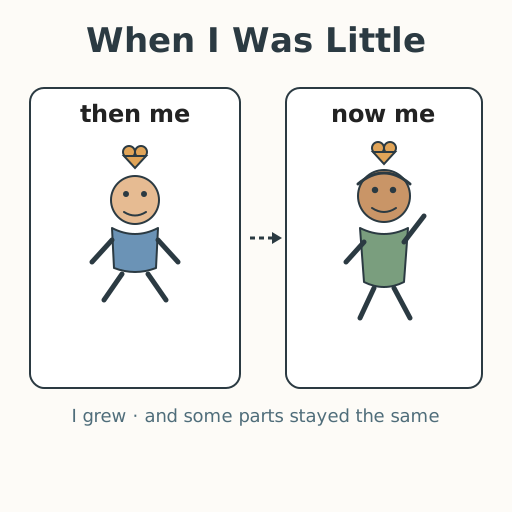
Lesson 2 — When I Was Little
Summary
Learners tell their own “then and now” story by comparing “little me” and “now me.” They draw both and notice one thing that changed and one that stayed the same.
Objectives
- Tell a “then and now” story about themselves or their family and how something changed. (D08.S1.K.01)
Connection
You were once small enough to be carried, and now you can walk and run and tell jokes. Growing up is a “then and now” story that is happening to you right now. The parts that stay the same — the things you have always loved — are part of your story too.
Materials
- Paper and crayons
- A photo from home (optional; never required)
Preparation
- Set out paper and crayons.
- Prepare a two-frame drawing sheet if using the enriched option.
Facilitator note
Written to the learner (“you”) so it works in a classroom and for a self-directed learner. Sensitivity is essential here: never require a baby photo or a story of early life. Some children were adopted, fostered, or separated from early caregivers; “little me” can mean any earlier time they remember or imagine. Never press a child who does not want to share. There is no “correct” family history.
Procedure
- Gather (5 min). Sit comfortably and think: what were you like when you were little?
- What changed? (10 min). Take turns acting it out. Then you could maybe only crawl or babble; now you can run, jump, and sing. Show it with your body.
- Draw “little me” and “now me” (15 min). Draw two pictures side by side. If you have no photo, draw from memory or from what a grown-up told you.
- Compare (10 min). Point to one thing that changed (bigger feet, taller, stronger). Point to one thing that stayed the same (still love the same song, the same person, the same game).
- Close (5 min). You have grown and changed — and some parts of you stay the same. Both are your story.
Differentiation
- Support: Draw only “now me” and tell one thing you used to do differently.
- Extension: Add a “someday me” frame and tell what you hope will be the same and different then.
Assessment
- Formative (observation): Can the learner name one thing that changed and one that stayed the same?
- Artifact (portfolio): The two-frame “little me / now me” drawing.