Lesson 10 — Then & Now: Stories of People
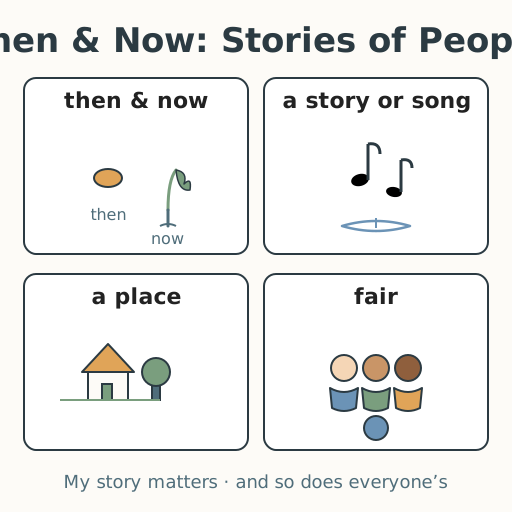
Learners bring the unit together in a four-part "Stories of People" page — a then-and-now, a noticed story or song, a place, and a fair idea — and share it.
Objectives
Objectives
- D08.S1.K.01 Tell a "then and now" story about themselves or their family and how something changed.
- D08.S2.K.01 Listen to a story or song from another culture and share one thing they noticed.
- D08.S3.K.01 Talk about a place they have been or a family story of moving, and draw or describe it.
- D08.S4.K.01 Retell a gentle story about someone being treated fairly or unfairly.
Essential question
What story can I tell about people, then and now?
Key vocabulary
Materials
Standard materials
- One page per learner · per learner A page with four boxes: "then & now," "a story or song," "a place," and "fair"
- Crayons and drawing tools · per learner
- Stapler, string, or clips · 1 set For gathering pages into a class "Stories of People" book
Low-tech / no-cost
- One large shared sheet A single paper or cloth divided into four parts, filled together
- Voice and body Each learner tells their story aloud and points to the box they are sharing
Enriched / lab & device
- Individual "Stories of People" books · 1 per learner Four small pages bound together for a keepsake book to take home
- Class display with photos or audio · 1 display A wall or recording that gathers every learner's four-part story
Works in different contexts
- large-group Learners fill their four boxes, then share in small circles and contribute one box each to a shared class book
- self-directed The learner completes all four boxes alone, then shares the finished page with a grown-up or peer
- outdoor-only Build the four-part story on the ground with found objects in four marked circles, then share aloud
Lesson 10 — Then & Now: Stories of People
Summary
Learners gather everything from the unit into one four-part “Stories of People” page: a then-and-now, a story or song they noticed, a place, and an idea about fairness. They share their page and build a class book or display.
Objectives
- Tell a “then and now” story about themselves or their family and how something changed. (D08.S1.K.01)
- Listen to a story or song from another culture and share one thing they noticed. (D08.S2.K.01)
- Talk about a place they have been or a family story of moving, and draw or describe it. (D08.S3.K.01)
- Retell a gentle story about someone being treated fairly or unfairly. (D08.S4.K.01)
Connection
History is the story of many people — and you are one of them. Your “then and now,” the stories and songs you noticed, the places you have been, and your sense of what is fair all belong in that big story. When we put our small stories together, we make a bigger one that belongs to everyone.
Materials
- A four-box page per learner (“then & now,” “a story or song,” “a place,” “fair”)
- Crayons and drawing tools
- Stapler, string, or clips for a class book
Preparation
- Prepare a four-box page for each learner (or one large shared sheet).
- Set up a gathering place and a spot to assemble the class book or display.
Facilitator note
Written to the learner (“you”) so it works in a classroom and for a self-directed learner. This is the unit’s capstone: a chance for each child to author their own small piece of history. Keep all four boxes optional in depth — a word or a drawing counts. Never force disclosure of family details; a child may draw a place as “home” without naming it. Celebrate each page as a real contribution to the class story.
Procedure
- Gather (5 min). Remember the unit: then and now, stories and songs, places, and fairness. You have learned all four.
- Fill the four boxes (20 min). On your page, draw or write one thing in each box: something that changed (then & now); one thing you noticed in a story or song; one place you have been; and one idea about what is fair.
- Share (10 min). With a partner or small group, show your page and tell about one box you love. Listen to theirs.
- Make the class book (5 min). Add your page to the “Stories of People” book or wall. Now everyone’s story is together.
- Close (5 min). History is the story of many people — and you are one of them. Your story matters.
Differentiation
- Support: Complete one box at a time with a grown-up scribe; a single word or mark in each box counts.
- Extension: Invite learners to add a fifth box: “someday” — one hope for the future of their own story.
Assessment
- Summative (portfolio): The four-part “Stories of People” page shows the learner’s then-and-now, a noticed story/song, a place, and a fair idea.
- Observation: Does the learner connect each box to the right idea from the unit and share it in their own words?