Lesson 09 — Calm Down
Learners practice one calming strategy — a deep breath, counting, or finding a safe space — to use when upset, framed as a helpful tool rather than a punishment.
Objectives
Objectives
- D01.S3.01.01 Use one calming strategy, such as a deep breath, counting, or finding a safe space, when upset, with a gentle reminder.
Essential question
What can I do to help my body and heart calm down when I am upset?
Key vocabulary
Materials
Standard materials
- A "calm corner" or safe-space marker · 1 A pillow, mat, or quiet spot learners can find when upset
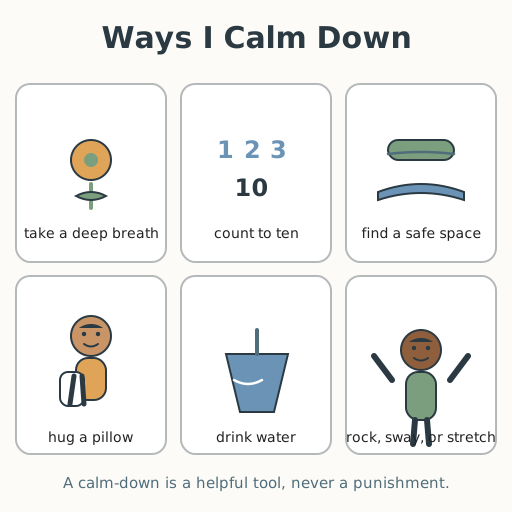
- Picture cards of calming strategies · 1 set Deep breath, count to ten, find a safe space, hug a pillow, drink water, rock or sway, stretch or shake
- A soft object to hold · 1 per learner A stone, shell, or soft toy for the breathing practice
Low-tech / no-cost
- The body and breath Practice the deep breath and counting with no props at all
- A quiet corner made of anything A blanket, a mat, or a marked spot in the shade can be the safe space
Enriched / lab & device
- A dedicated calm corner with sensory objects · 1 Soft textures, a slow-glitter jar, and quiet headphones for self-regulation practice
- A short audio of slow breathing or nature sounds · 1 per group Optional sound to guide the breathing practice
Works in different contexts
- large-group Practice the deep breath together as a whole group; then point to each strategy card so everyone learns the menu
- self-directed A learner tries each strategy alone, then chooses the one that helps most and marks it with a star
- outdoor-only Use the outdoors as the safe space — find a quiet spot in the shade, breathe with the wind, or count leaves while calming
- level-grouped Learners ready to extend practice choosing their own strategy and naming when they would use it, without a reminder
Lesson 9 — Calm Down
Summary
Learners learn and practice a calming strategy — a deep breath, counting, or finding a safe space — to use when they feel upset. Calming is framed positively: it is a tool that helps, never a punishment, and everyone gets upset sometimes.
Objectives
- Use one calming strategy, such as a deep breath, counting, or finding a safe space, when upset, with a gentle reminder. (D01.S3.01.01)
Connection
Everyone gets upset sometimes — angry, scared, or so excited it feels like too much. When that happens, your body might go tight and fast. A calming strategy helps your body slow down so your heart and mind can catch up. It is not a punishment; it is a tool you can carry with you anywhere, like a deep breath in your pocket.
Materials
- A calm corner or safe-space marker (pillow, mat, or quiet spot)
- Picture cards of calming strategies (deep breath, count to ten, safe space, hug a pillow, drink water)
- A soft object to hold (stone, shell, or soft toy)
Preparation
- Set up the calm corner or safe space and show learners where it is.
- Prepare the strategy picture cards.
- Arrange a quiet space for breathing practice.
Facilitator note
This lesson is written to the learner (“you”). Frame calming as help, never as discipline — never send a learner to the calm corner as a punishment. Model your own calming (“I am going to take a deep breath now”). With a gentle reminder, guide a learner who is upset to the strategy, but let them choose. Some learners calm better with movement than stillness; honor that.
Procedure
- Gather (5 min). Think of a time you felt upset. What did your body do? Fast heart, tight shoulders, hot face. Today you learn a tool to help your body slow down.
- Meet the strategies (10 min). Look at the strategy cards: a deep breath, a count to ten, a safe space, a hug, a drink of water, and ways to move — rocking, swaying, stretching, or shaking out the tight feeling. Each one helps your body feel safe and slow. Some bodies calm with stillness; others calm with movement. Both are good.
- Practice the deep breath (10 min). Hold your soft object. Breathe in slowly through your nose, like smelling a flower. Breathe out slowly through your mouth, like blowing on hot soup. Do it three times. Feel your body relax.
- Find your safe space (10 min). Visit the calm corner. Notice what makes it calm — soft, quiet, still. Practice walking there, taking one breath, and returning when you feel ready.
- Close (5 min). Choose your favorite strategy and give it a name, like “flower breath” or “my quiet spot” — or just point to its picture. You can use it any time you need it.
Differentiation
- Support: Offer one strategy only (the deep breath) and practice it daily as a routine before it is needed.
- Extension: Practice choosing a strategy without a reminder and naming when you would use it.
Assessment
- Formative (observation): Can the learner use one calming strategy (deep breath, counting, or safe space) when prompted gently?
Home connection
Teach your calming strategy to someone at home, and try it together once before bed.
Resources
- CASEL SEL Framework (self-management competency): https://casel.org/fundamentals-of-sel/