Lesson 04 — Listening to Hunger and Thirst
Learners focus on two body signals — hunger and thirst — and practice simple, kind responses: drink water when thirsty, eat when hungry if food is near, and tell a trusted adult.
Objectives
Objectives
- D03.S1.01.02 Notice and name body signals such as hunger, thirst, and tiredness when they feel them.
Essential question
What do I do when I notice hunger or thirst?
Key vocabulary
Materials
Standard materials
- Signal picture cards (hunger, thirst) · 1 set Reuse from Lesson 3
- A cup and a safe jug or bottle of water · 1 set To show the thirsty response — pouring and drinking a small drink of water
- Paper and crayons · per learner To draw "what my body is telling me"
Low-tech / no-cost
- Voice and body Act out the hungry and thirsty responses; no cards, cup, or paper needed
- Found container Any safe cup or hollow object to pretend to drink from
Enriched / lab & device
- Hungry or thirsty? sorting game cards · 1 set per pair Picture cards to sort into hungry, thirsty, or neither
- Water station with labeled cups · 1 per group A real, supervised water break so learners practice drinking when thirsty
Works in different contexts
- large-group Act out the hungry and thirsty responses for the whole group, then do a shared water break
- self-directed A learner reviews the two signals, practices pouring and drinking water, and draws what their body tells them
- outdoor-only Practice the thirsty response with a real water break during outdoor play; notice thirst after running
- multi-age Older learners help younger ones pour water safely and remind them to drink when their mouth feels dry
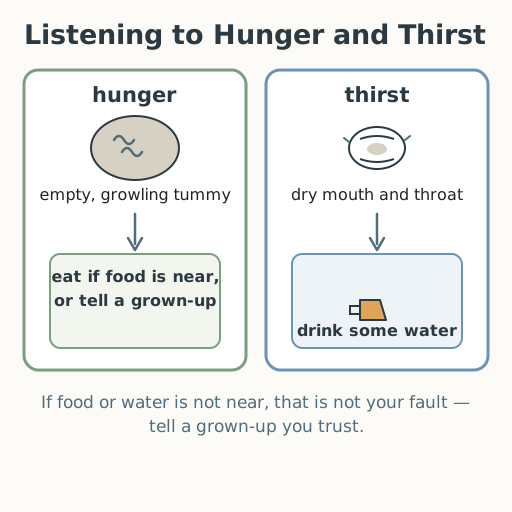
Lesson 4 — Listening to Hunger and Thirst
Summary
Learners take a closer look at two body signals — hunger and thirst — and learn simple, kind responses to each: drink water when thirsty, eat when hungry if food is near, and tell a trusted adult. They practice the thirsty response with a real drink of water and draw what their own body is telling them.
Objectives
- Notice and name the body signals of hunger and thirst, and say a simple, kind response to each. (D03.S1.01.02)
Connection
When your mouth feels dry or your tummy rumbles, your body is asking for something. Drinking water when you are thirsty helps your body work well, and eating when you are hungry gives it energy to play and learn. Knowing the message — and what to do — helps you take care of the one body that is yours.
Materials
- Signal picture cards (hunger, thirst)
- A cup and a safe jug or bottle of water
- Paper and crayons
Preparation
- Set out the hunger and thirst cards from Lesson 3.
- Fill a clean jug or bottle with drinking water and set out a cup.
- Prepare paper and crayons for the drawing.
Facilitator note
This lesson is written to the learner (“you”) so it works in a classroom and for a self-directed learner. Prepare the cards and a safe water station, then guide the sorting and the water break. Be especially gentle here: never assume a learner has food or water available, and never single anyone out. If a learner says they are hungry or thirsty and nothing is available, respond warmly and help them name a trusted adult to tell. Eating and drinking customs vary across families and cultures, and every body’s needs are different — there is no “right” amount or time to eat.
Procedure
- Gather (5 min). Look at your two cards: hunger and thirst. Where do you feel each one? Hunger is an empty, growling tummy; thirst is a dry mouth and throat.
- What can I do? (10 min). Match a kind response to each signal: when you are thirsty, drink some water; when you are hungry, eat if food is near. If there is no food or water right now, that is not your fault — tell a grown-up you trust. Your body’s message is always right, even when the answer has to wait.
- Water break (10 min). Practice the thirsty response. If you feel thirsty, pour a little water and drink it. If you are not thirsty, that is fine too — you can watch and learn.
- Hungry or thirsty? sort (10 min). When you hear a clue, point to the card: “tummy growling” — hunger; “mouth feels dry” — thirst; “you just drank a big cup” — neither. There is no wrong answer; wonder together.
- Draw it (10 min). Draw a picture of your body telling you something today — hunger, thirst, or neither — and what you can do. Close by naming your body’s message and its answer aloud.
Differentiation
- Support: Focus on thirst only, with a real water break; name the dry-mouth feeling together.
- Extension: Ask learners to draw a second body signal and write or tell one response.
Assessment
- Formative (observation): Can the learner name hunger and thirst, tell where each is felt, and say one kind response (drink water, eat if food is near, tell an adult)?
Resources
- World Health Organization — global health and wellbeing reference: https://www.who.int/