Lesson 05 — What Might They Need?
Learners connect a feeling or clue to what a person might want or need in a familiar situation, and practice saying their guess kindly.
Objectives
Objectives
- D02.S2.01.02 Tell what another person might want or need in a familiar situation.
Essential question
How can I guess what someone needs?
Key vocabulary
Materials
Standard materials
- Scene picture cards · 1 set Familiar situations — a spilled drink, a dropped pencil, a friend alone at play, a heavy bag
- Paper and crayons · per learner
Low-tech / no-cost
- Acted-out scenes Act out each situation with bodies and voices instead of picture cards
- Real classroom moments Use a real need noticed in the room as the "scene"
Enriched / lab & device
- Short story or wordless picture book · 1 per group A wordless story where learners infer what a character needs
- Camera or tablet · 1 per group Photograph a staged "need" scene and discuss what the person might need
Works in different contexts
- large-group Hold each scene card up large; the whole group suggests what the person might need, then act it out together
- self-directed A learner looks at a scene card or a wordless picture book page and draws or tells what the person might need
- outdoor-only Use real outdoor moments — a dropped jacket, a friend who fell — as the scenes to read and respond to
- multi-age Older learners act out a need scene; younger learners guess what the person might need and offer it
Lesson 5 — What Might They Need?
Summary
Learners look at familiar situations, read the clues, and guess what the person might want or need. They practice turning a guess into a kind offer and learn that needs are not always the same as wants.
Objectives
- Tell what another person might want or need in a familiar situation. (D02.S2.01.02)
Connection
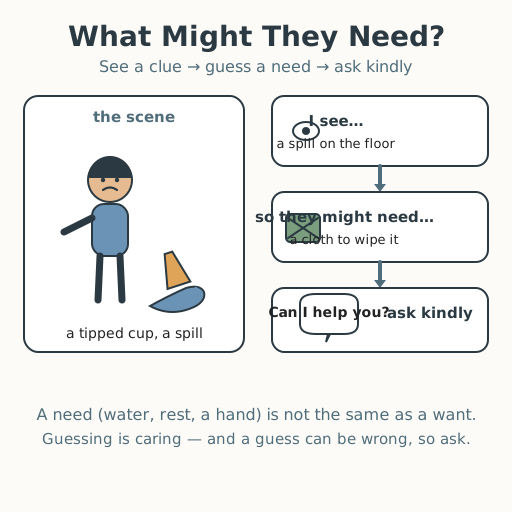
When you notice someone’s clues, you can guess what might help them: a friend who spilled their water might need a cloth; a friend sitting alone at play might want company. Guessing what another person needs is how caring moves from noticing to doing.
Materials
- Scene picture cards (spilled drink, dropped pencil, a friend alone, a heavy bag)
- Paper and crayons
Preparation
- Arrange a circle for gathering.
- Set out the scene picture cards where all can see them.
Facilitator note
Guide learners from clue to need with a simple chain: “I see… so they might need…” Keep guesses open — there is no single right answer, and that is the point. Name gently that a need (water, rest, a hand) is not the same as a want (a toy, first turn). Read the procedure aloud and model the chain sentence.
Procedure
- Gather (5 min). Sit in a circle. Think of a time you needed something. How did you feel before someone helped you?
- Clue to need (10 min). Look at the scene cards. For each one, say the chain: “I see ___ (the clue), so they might need ___ (the need).” Say your guess out loud — or point to the clue and the need on the cards, or act it out.
- Guess kindly (15 min). Practice saying your guess as a kind offer: “You look like you might need help. Can I help you?” — or offer it with a gesture, a sign, or a picture card. Remember a guess can be wrong — ask, don’t assume.
- Draw a need (10 min). Draw one scene and the need you guessed. Show what the person might need and how you could help.
- Close (5 min). Remember: needs and wants are different. When you guess what someone needs and ask kindly, you turn caring into help.
Differentiation
- Support: Offer a two-choice guess (“might they need a cloth or a toy?”) to make the chain easier.
- Extension: Ask learners to name two different guesses for the same scene and explain why both could be right.
Assessment
- Formative (observation): Can the learner state a want or need that fits the scene’s clues?
- Artifact (portfolio): The “need and help” drawing, kept in the learner’s portfolio.