Lesson 09 — Sharing and Caring for Materials
Learners practice sharing classroom resources and caring for shared materials, and see that caring for shared things is caring for each other and for the Earth.
Objectives
Objectives
- D02.S4.01.02 Share classroom resources and take care of shared materials.
Essential question
How do we share and take care of the things we use together?
Key vocabulary
Materials
Standard materials
- A shared supply set · 1 set per group Crayons, scissors, books, or blocks that a small group must share
- "Materials doctor" check cards · 1 set Simple picture checklist for checking and caring for shared supplies
Low-tech / no-cost
- Any shared objects Share and care for whatever the group already has — stones, sticks, cups, books
- Voices and bodies Act out sharing and caring with no special supplies
Enriched / lab & device
- A classroom "care station" · 1 A labeled spot with a cloth, a bin, and a checklist for daily materials care
- Reusable or secondhand items · 1 set Real examples of things made to be used again and cared for, connecting care to less waste
Works in different contexts
- large-group Rotate stations where each small group shares one supply set, then does a "materials doctor" check together
- self-directed A learner sorts and cares for their own shared materials at home or in class, using the check card alone
- outdoor-only Share outdoor tools or found materials (a shovel, a watering can) and care for a shared natural space by cleaning or tidying it
- multi-age Older learners model a tidy-up routine; younger learners follow along and check the supply set together
Lesson 9 — Sharing and Caring for Materials
Summary
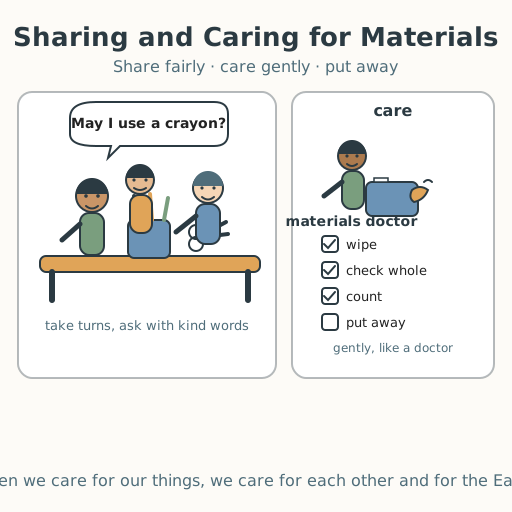
Learners share a limited set of supplies so everyone has enough, and practice a “materials doctor” routine for caring for shared things — using them gently, cleaning up, and putting them away. They see that sharing is fair, and care makes things last.
Objectives
- Share classroom resources and take care of shared materials. (D02.S4.01.02)
Connection
Shared things — crayons, books, toys, water, the playground — work for everyone only when everyone uses them fairly and gently. When you share, everyone gets a turn; when you care, things last longer and the Earth is spared waste. Caring for shared things is caring for each other.
Materials
- A shared supply set (crayons, scissors, books, or blocks)
- “Materials doctor” check cards
Preparation
- Divide supplies into shared sets, one per small group — make some sets slightly short on purpose so sharing is real.
- Arrange small-group work spaces and a tidy-up spot.
Facilitator note
Sharing is taught here as fairness and mutual aid, not sacrifice: when one child shares, everyone — including them — is better off. Make the shortage gentle, not punishing, so no one is left empty. Connect caring for shared materials to caring for the Earth (reuse, less waste) naturally. Read the procedure aloud; join the “materials doctor” check.
Procedure
- Gather (5 min). Sit in a circle. Think: what happens to crayons or toys when no one takes care of them?
- Share so everyone has enough (15 min). Work in a small group with one shared supply set. Some sets are short. Talk together: how can everyone get a turn? Pass, take turns, and use kind words to ask. Notice: sharing makes the little bit enough for all.
- Be a materials doctor (15 min). Use the check card to care for your supplies: wipe them, check they are whole, count them, and put them away where they belong. Treat the things gently, the way a doctor treats a patient.
- Close (5 min). Remember: shared things are everyone’s things. Share fairly, care gently, put away. When we care for our things, we care for each other and for the Earth.
Differentiation
- Support: Give a smaller supply set and model one turn-taking exchange at a time. Pair a learner with limited movement with a “materials buddy” who does the lifting while the learner checks and counts — caring is shared, not a test of hands.
- Extension: Invite learners to propose one new class rule or routine for caring for a shared material, and try it for a week.
Assessment
- Formative (observation): Does the learner take a turn, use kind words to ask, and handle materials gently?
- Performance (routine): Did the learner complete a “materials doctor” check and put materials away correctly?