Lesson 08 — Listening to a Friend's Feelings
Learners practice listening when a friend says how they feel — facing the speaker, waiting their turn, and repeating back the feeling — and discover that listening is as important as speaking in a conflict.
Objectives
Objectives
- D09.S4.01.01 Use words to say how they feel during a conflict and listen when a friend says how they feel.
Essential question
How do I listen when a friend tells me how they feel?
Key vocabulary
Materials
Standard materials
- A listening picture strip · 1 Three steps — look or face toward the speaker, wait for their turn, hear and repeat back their feeling
- Two puppets or soft toys · 2 For practicing listening with a partner's story
- A soft object as a turn marker · 1 A small cloth, stone, or ball so the speaker and the listener take clear turns
Low-tech / no-cost
- Voice and body Practice listening with real partners; no strip or toys needed
- A drawn listening strip Draw the three listening steps on paper or the ground
Enriched / lab & device
- Laminated listening cards · 1 set per pair Durable reminder cards for the classroom peace corner
- A recording of a short feeling story · 1 Optional audio so a learner can practice hearing and repeating a feeling alone
Works in different contexts
- large-group Model listening with two volunteers while the group watches, then have pairs practice with the turn marker
- self-directed The learner practices the three steps alone by hearing a feeling story and repeating it back
- outdoor-only Practice listening in pairs sitting face to face outdoors, using a found turn marker (a stone or leaf)
- multi-age Older learners demonstrate listening first, then younger learners practice with a partner
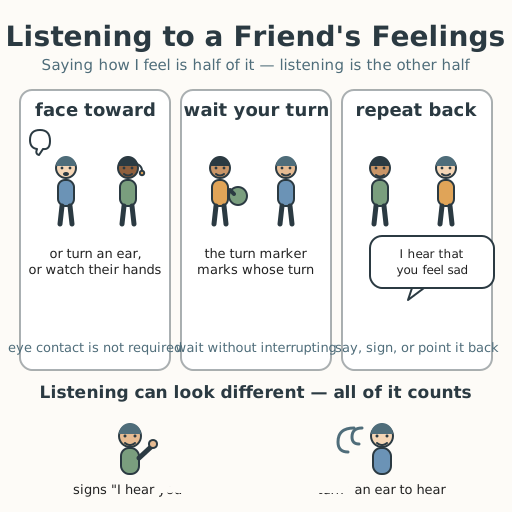
Lesson 8 — Listening to a Friend’s Feelings
Summary
Learners practice the listening half of solving a conflict: facing the speaker, waiting their turn, and repeating back the feeling they heard. They discover that both sides in a conflict deserve to be heard.
Objectives
- Use words to say how they feel during a conflict and listen when a friend says how they feel. (D09.S4.01.01 — listening)
Connection
Think of a time someone really listened to you — they looked at you, waited, and you could tell they heard you. Being heard feels like being cared for. In a conflict, saying how you feel is only half of it; the other half is listening when your friend says how they feel. People everywhere, in every language, show care by listening. Today you will practice being the listener.
Materials
- A listening picture strip (look/face toward the speaker, wait your turn, hear and repeat back their feeling)
- Two puppets or soft toys
- A soft object as a turn marker
Preparation
- Prepare the listening picture strip and have the turn marker ready.
- Arrange pairs or small groups where learners can sit face to face.
Facilitator note
Written to the learner (“you”). This lesson teaches that both sides get heard — in a conflict, no one side is the only one with feelings. Listening is active, not passive: face toward the speaker (in whatever way a learner can — a learner who is blind or low-vision turns an ear toward the voice and shows listening by stillness and a response; a learner who is deaf or hard of hearing watches the speaker’s face and signs “I hear you” or nods), wait for their turn without interrupting, and repeat back the feeling. If you use a passing object to mark whose turn it is, call it a turn marker. People everywhere find ways to make sure one voice is heard at a time; a passing object is one simple, respectful way. It is a reminder to listen while one person speaks, not a decoration. The turn marker also supports accessibility: a learner who does not speak aloud holds it and points, signs, or gestures their feeling while the listener hears it; a learner with a motor difference can have a partner place the marker. “Repeating back” can be spoken, signed, or shown by pointing to the feeling on a board. Keep the practice gentle and free of blame; never require anyone to share a real, private feeling — invented or acted feelings are welcome, and a learner may always pass. Listening is a gift everyone can give, whatever their body can do.
Procedure
- Gather (5 min). Think of a time someone listened to you. How did it feel to be heard?
- Meet the listening steps (10 min). Learn to listen: face toward the speaker (or turn an ear, or watch their hands), wait for their turn without interrupting, and hear and repeat back their feeling.
- Practice with a partner (15 min). Sit face to face. One of you holds the turn marker and says, signs, or points to a feeling. The other listens and repeats it back: “I hear that you feel…” Then trade — everyone gets to speak and to listen.
- Listen in a small conflict (10 min). With the puppets, show a small conflict. Practice listening to both sides, one at a time, repeating back each feeling.
- Close (5 min). In a conflict, both sides have feelings, and both deserve to be heard. Listening is how we show we care.
Differentiation
- Support: Practice only “wait for your turn” first, using the turn marker; model repeating back one feeling. A non-speaking learner points to the feeling they heard; a learner with limited movement directs a partner.
- Extension: Invite learners to practice listening to two different feelings in a row and repeating back both, noticing what changes.
Assessment
- Formative (observation): Can the learner listen when a friend says how they feel and repeat back the feeling?
- Performance: The practiced listening exchange with a partner, reflected on aloud.
Home connection
At home, practice being the listener: let someone tell you about their day and repeat back one feeling you heard.