Lesson 09 — Two Ways to Calm Down
Learners name and practice two calming strategies — take three slow breaths, and count slowly to ten — then choose the one they will use on their own, marking it on a choice card. Calming is framed as a helpful tool, never a punishment.
Objectives
Objectives
- D01.S3.02.01 Name two strategies for managing strong feelings and choose one to use on their own.
Essential question
What two strategies can I use to calm a strong feeling, and which one will I choose?
Key vocabulary
Materials
Standard materials
- Calm-down menu (two strategies) · 1 Two big cards — take three slow breaths, and count slowly to ten — with icons
- A soft object to hold · 1 per learner A stone, shell, or soft toy for breathing practice
- A 'my choice' card · 1 per learner A card with a blank star to mark which strategy the learner will use
Low-tech / no-cost
- The body and breath Practice the breath and the count with no props at all
- Fingers for counting Count to ten on your own fingers, no cards needed
Enriched / lab & device
- A dedicated calm corner with sensory objects · 1 Soft textures and a slow-glitter jar for self-regulation practice
- A short audio of slow breathing or nature sounds · 1 per group Optional sound to guide the breathing practice
Works in different contexts
- large-group Practice both strategies together as a whole group, then invite everyone to mark their choice card
- self-directed A learner tries both strategies alone, then marks the one that helps most on the choice card
- outdoor-only Breathe with the wind and count leaves or stones while calming; the outdoors is the calm corner
- level-grouped Learners ready to extend name when and where they would use each strategy on their own, without a reminder
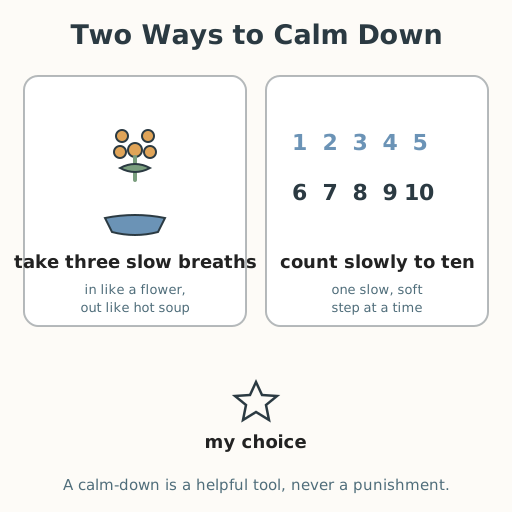
Lesson 9 — Two Ways to Calm Down
Summary
Learners name and practice two calming strategies — take three slow breaths and count slowly to ten — then choose the one they will use on their own, marking it on a choice card. They learn that calming is a helpful tool, never a punishment, and that different strategies work for different people and different moments.
Objectives
- Name two strategies for managing strong feelings and choose one to use on their own. (D01.S3.02.01)
Connection
When a feeling gets very big — mad, scared, or so excited it feels like too much — your body can go tight and fast. Last year you learned one calming tool, like a deep breath. This year you grow a whole toolbox, and you get to choose. A calm-down strategy is like a deep breath you keep in your pocket: it is there whenever you need it, and no one can take it away from you. It is help, never a punishment.
Materials
- Calm-down menu (two strategies)
- A soft object to hold
- A “my choice” card
Preparation
- Prepare the two strategy cards and the choice cards.
- Set out the soft objects.
- Arrange a quiet space for practice.
Facilitator note
This lesson is written to the learner (“you”). Frame calming as help, never as discipline — never send a learner to calm down as a punishment. Model both strategies with your own body first, then guide practice, then let each learner choose — the choice is the point of this objective. Some bodies calm with movement rather than stillness; if the two stillness strategies do not fit a learner, offer a movement option (slow sway, gentle stretch) as an equally good choice. The choice is theirs.
Procedure
- Gather (5 min). You have learned to name your feelings and read your body’s clues. Now, when a feeling gets very big, what can you do? Today you meet two calm-down tools and choose your own.
- Meet the two strategies (10 min). Look at the menu. Strategy one: take three slow breaths. Breathe in through your nose like smelling a flower; breathe out through your mouth like blowing on hot soup. Strategy two: count slowly to ten. Count each number like a slow, soft step — 1… 2… 3… all the way to 10. Both help your body slow down so your heart and mind can catch up.
- Practice together (15 min). Hold your soft object. Try the three slow breaths — in like a flower, out like soup — three times. Then try the slow count to ten, touching a finger for each number. Notice which one your body liked best.
- Choose your tool (10 min). On your choice card, mark the strategy you will use — the breaths or the count (or, if you prefer, a slow sway or gentle stretch). This is your tool. Say when you might use it: before you yell, before you give up, before bed, when a game is too loud.
- Close (5 min). You have a toolbox now, and you are the one who chooses which tool to use. Next time a feeling gets big, reach for your tool.
Differentiation
- Support: Practice one strategy only (the three breaths) until it is solid, then add the count.
- Extension: Teach your chosen strategy to a friend, and name a second moment when you would use it.
Assessment
- Formative (observation): Can the learner name two calming strategies and choose one to use on their own?
- Self-check: The learner marks their choice card and says when they will use it.
Home connection
Teach your chosen calm-down tool to someone at home, and try it together once before bed.
Resources
- CASEL SEL Framework (self-management competency): https://casel.org/fundamentals-of-sel/