Lesson 06 — Materials and Their Jobs
Learners sort and describe materials by their properties — hard, soft, strong, clear, flexible — and explain how those properties make each material useful for a different job. They discover that we choose materials on purpose, everywhere on Earth, and that the same job can be done by different materials.
Objectives
Objectives
- D06.S3.02.01 Sort materials by their properties and explain how properties make them useful for different jobs.
Essential question
How do a material's properties make it useful for different jobs?
Key vocabulary
Materials
Standard materials
- A set of real objects made of different materials · 1 set A wooden block, a metal spoon, a cloth, a plastic or glass cup, a rubber band, a paper sheet
- A "material and job" matching chart · 1 To match each material's property to the job it is good for
- Paper and crayons · per learner
Low-tech / no-cost
- Found objects from around the room or home A stick, a stone, a leaf, a cloth — feel each and name its property
- Hands and voices Feel each material, name its property, and say a job it is good for
Enriched / lab & device
- A "guess the job" materials game · 1 set Cards with a property on one side and a job on the other to match
- A design challenge sheet · per learner Choose a job (a cup, a mat, a handle) and pick the best material, then say why
Works in different contexts
- large-group Feel and name each material's property as a whole group, then pairs match materials to jobs and explain to each other
- self-directed A learner feels each object, names its property, and writes or draws one job that property makes it good for
- outdoor-only Gather sticks, stones, leaves, and water and wonder which material would make a good roof, a good path, a good cup
- multi-age Older learners add harder vocabulary (flexible, stiff, absorbent) while younger learners use hard, soft, strong, and clear
- level-grouped Learners who can compare two materials for the same job explain their choice; others match one material to one job
Lesson 6 — Materials and Their Jobs
Summary
Everything we make is made of a material — wood, metal, cloth, glass, stone, paper, plastic — and every material has properties: it is hard or soft, strong or weak, clear or cloudy, stiff or bendy. Learners feel and name these properties, sort materials by them, and explain how a property makes a material just right for a certain job. We choose materials on purpose, and that choosing is a quiet kind of technology people do everywhere.
Objectives
- Sort materials by their properties and explain how properties make them useful for different jobs. (D06.S3.02.01)
Connection
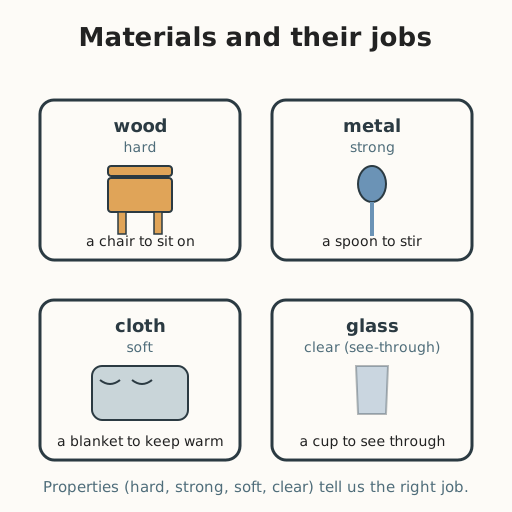
Your spoon does not melt in hot soup, and your blanket is soft against your skin. That is not luck — people chose those materials for those jobs. Metal is strong and does not melt easily, so it makes a good spoon. Cloth is soft and bendy, so it makes a good blanket. When you pick a material because of what it is like, you are thinking like a maker, a builder, and a scientist all at once.
Materials
- A set of real objects made of different materials (a wooden block, a metal spoon, a cloth, a plastic or glass cup, a rubber band, a paper sheet)
- A “material and job” matching chart
- Paper and crayons
Preparation
- Gather safe objects with clearly different properties.
- Prepare the matching chart (property on one side, job on the other).
- Plan one worked example: feel a material, name its property, name its job.
Facilitator note
This lesson is written to the learner (“you”). The skill is a chain — feel the property → name it → connect it to a job — so model the whole chain once, then guide, then release. Use real objects learners can touch; touch is the concrete anchor. Honor global variety: houses are made of mud brick, wood, stone, or ice in different places, and cups of clay, glass, gourd, or metal — the same job done by different materials, each chosen for what the place has and what the job needs. A light environmental and technology lens: some materials can be used again and again, and some are thrown away — wonder together about choosing materials that last and can be reused, without fear or blame. Note the safety of glass for very young hands and swap in a clear plastic cup where needed.
Procedure
- Gather and remember (5 min). We sorted living things by where they live. Now we sort the things people make — by what they are made of.
- Feel and name properties (15 min). Touch each object. What is it like? Hard or soft? Strong or weak? Clear or cloudy? Stiff or bendy? Say each property and sort the objects into groups by it.
- Match materials to jobs (15 min). Why do we choose each material? “Wood is hard and strong, so it is good for a chair.” “Cloth is soft, so it is good for a blanket.” Match each material to a job and tell a partner your reason.
- One job, many materials (10 min). Pick one job — a cup, a mat, a roof. How many different materials could do it? Which would you choose, and why?
- Close (5 min). A material’s property tells us its job. People everywhere choose materials on purpose — and now you can too.
Differentiation
- Support: Feel two materials (soft cloth, hard wood) and match each to one simple job with the frame “It is ___, so it is good for ___.”
- Support (non-speaking): Point to the property word and the job after feeling each material.
- Support (blind/low-vision): Identify materials by touch — rough, smooth, heavy, light, bendy — and name the job by telling.
- Extension: Compare two materials for the same job (wood vs. metal spoon) and explain which you would choose and why.
Assessment
- Formative (observation): Can the learner name at least two material properties and connect one to a job (“It is ___ so it is good for ___”)?
- Peer: Partners check each other’s material-to-job matches and reasons.
- Artifact (portfolio): The “material and job” matching page.
Home connection
At home, find three things made of different materials. Feel each one and tell a grown-up its property and its job: “This bowl is smooth and strong, so it is good for holding soup.”
Resources
- BBC Bitesize (KS1 Science), “Everyday materials” — describing materials and their properties, and choosing the right material for each job. https://www.bbc.co.uk/bitesize/topics/zrssgk7