Lesson 07 — Sound, Light, and Heat
Learners discover that sound, light, and heat are forms of energy we can observe with our own bodies — we hear sound, see light, and feel heat. They find examples of each, sort them, and learn that energy is the power to make things happen.
Objectives
Objectives
- D06.S3.02.02 Describe how sound, light, and heat are forms of energy we can observe.
Essential question
How are sound, light, and heat forms of energy I can observe?
Key vocabulary
Materials
Standard materials
- Things that make sound, light, and heat safely · 1 set A bell or a drum, a lamp or a window, a warm (not hot) surface or the sun on skin
- A three-column chart · 1 Three columns — "sound", "light", and "heat" — with space to draw what each one does
- Paper and crayons · per learner
Low-tech / no-cost
- Body and voice Clap or hum for sound, feel the sun for heat, blink or shade your eyes for light — no objects needed
- A sunny window or a patch of ground To feel warmth and see light directly
Enriched / lab & device
- A safe set of sound makers · 1 set A drum, a shaker, a ruler twanged on a desk edge — to feel the vibration
- A "what energy do I sense?" walk card · per learner A card to tally every sound, light, and heat noticed during a short walk
Works in different contexts
- large-group Make and sense each form of energy together, marking the shared chart before pairs explore on their own
- self-directed A learner finds one example of sound, one of light, and one of heat, and draws or writes what each one does
- outdoor-only Listen for sound, feel the sun's heat, and watch light and shadow outside — tally all three on a walk
- multi-age Older learners explain that sound is a vibration you can feel, while younger learners just match each energy to the sense it uses
- level-grouped Learners who can explain that sound comes from a vibrating object do so; others name which sense tells them about each energy
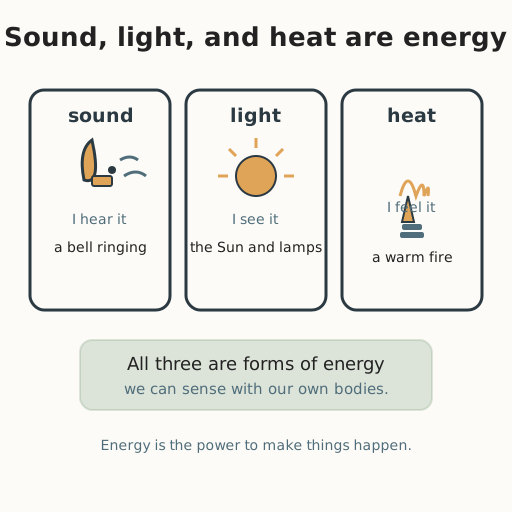
Lesson 7 — Sound, Light, and Heat
Summary
Energy is the power to make things happen — and three kinds of it, sound, light, and heat, are right there in a learner’s own body to sense: we hear sound, see light, and feel heat. Learners find and sort examples of each, and discover that sound comes from things vibrating (shaking back and forth), while light and heat often come from the Sun or from things people make. Energy moves and changes things — and we can observe it.
Objectives
- Describe how sound, light, and heat are forms of energy we can observe. (D06.S3.02.02)
Connection
Clap your hands — you hear sound. Step into the sun — you see light and feel heat. These three are not just feelings; they are energy at work. Energy is the power to make something happen: sound shakes the air to your ear, light lets your eyes see, and heat warms your skin. You can sense all three with your own body, right now.
Materials
- Things that make sound, light, and heat safely (a bell or a drum, a lamp or a window, a warm — not hot — surface or the sun on skin)
- A three-column chart (“sound / light / heat”)
- Paper and crayons
Preparation
- Gather safe sound makers and a source of light and gentle warmth.
- Draw the three-column chart.
- Review safety: nothing hot enough to burn; no loud sounds near ears.
Facilitator note
This lesson is written to the learner (“you”). Keep energy concrete: name the sense that tells us about each form — ear (sound), eye (light), skin (heat). The one careful scientific step is that sound comes from vibration — a drum’s skin shakes, a ruler twanged on a desk wiggles, your throat hums when you touch it; you can offer this as a wonder (“what do you feel on the drum when it booms?”) rather than a definition to memorize. Heat and light we describe by what they do (warm, brighten) at this age — their deeper story (electromagnetic waves, molecules) waits for later grades. Model the three-column sort once (worked example), then let learners find their own examples. Distinguish evidence from values: “the Sun warms our skin” is something we can observe and agree on; “I like sunny days” is a feeling, not evidence — both are fine, and they are different. A technology and environment lens: people everywhere have made tools for sound, light, and heat — drums, lamps, fires — and the Sun gives light and warmth for free.
Procedure
- Gather and remember (5 min). You can hear, see, and feel. Today we meet three kinds of energy that come to those senses: sound, light, and heat.
- Sense each energy (15 min). Ring the bell or tap the drum — that is sound, and you hear it. Look at the lamp or the window — that is light, and you see it. Hold your hand near the warmth (not touching anything hot) — that is heat, and you feel it. Say each one and the sense that catches it.
- Wonder about sound (10 min). Tap the drum gently and touch its skin — do you feel it shake? That shaking is called vibrating, and vibrating is what makes sound. Hum and touch your throat — feel the vibration?
- Sort examples (10 min). Think of more examples and put each into the chart: thunder and birdsong under sound; the Sun and lamps under light; the Sun and a warm bowl under heat. Draw one example in each column.
- Close (5 min). Sound, light, and heat are energy we can observe with our own bodies. You carry the tools to sense them everywhere you go.
Differentiation
- Support: Match one example to each form using the frame “I hear ___, I see ___, I feel ___.”
- Support (non-speaking): Point to the ear, eye, or skin and to the sound, light, or heat source.
- Support (Deaf/HH): Focus on light and heat you can see and feel, and on feeling a drum or speaker’s vibration through the hands.
- Support (blind/low-vision): Meet sound by hearing it and feeling the drum or your own throat vibrate; meet heat by touch. For light, feel the Sun’s warmth on your skin (light you can feel) and have a partner describe what is bright and dim, while you name the sound and heat you sense.
- Extension: Predict whether a big drum makes a bigger or smaller vibration than a small one, then test it gently with a fingertip.
Assessment
- Formative (observation): Can the learner name the three forms of energy and the sense (or body part) that observes each, with one example apiece?
- Artifact (portfolio): The three-column “sound / light / heat” chart with one drawn example each.
Home connection
At home, sit still for one minute and find one sound, one light, and one heat. Tell a grown-up which sense caught each one. You are sensing energy.
Resources
- BBC Bitesize (KS2 Science), “How are sounds made?” — sound is made when things vibrate, and we hear it with our ears. https://www.bbc.co.uk/bitesize/topics/zgffr82