Lesson 04 — Water, My Body's Drink
Learners discover why water matters for the body, notice their own thirst, and practice drinking water when thirsty. They also learn, with care and honesty, that clean water is precious and not available to everyone — so water is honored, never wasted, and shared.
Objectives
Objectives
- D03.S3.02.02 Explain the importance of drinking water and drink water when thirsty.
Essential question
Why does my body need water, and how do I know when to drink?
Key vocabulary
Materials
Standard materials
- A clear cup or bottle of water · per learner Safe drinking water for each learner to drink when thirsty
- A "thirsty body" chart · 1 Pictures of times the body needs water — playing, hot weather, waking up, during a meal
Low-tech / no-cost
- A shared cup and safe water Drink from one clean cup or a cupped hand; name the times you feel thirsty
- Voice and body Act out a dry mouth and a "drink!" feeling; no cup needed to learn the idea
Enriched / lab & device
- A picture book about water around the world · 1 A book showing how people get and carry clean water in different places
- A classroom water station · 1 A labeled place where learners may get a drink when they feel thirsty
Works in different contexts
- large-group Discuss thirst together, then let learners drink in small groups while others draw a "my thirsty times" picture
- self-directed A learner reads or hears the steps, notices their own thirst, drinks water, and draws one time their body needs water
- outdoor-only Notice thirst during a walk or play; drink from a safe source and talk about where clean water comes from
- multi-age Older learners help carry and pour water and model drinking when thirsty; younger learners practice noticing their thirst
- level-grouped Learners who can explain why water matters share aloud; others point to a "thirsty" picture and drink when thirsty
Lesson 4 — Water, My Body’s Drink
Summary
Learners discover why water matters for the body, notice their own thirst, and practice drinking water when thirsty. They also learn, with care and honesty, that clean water is precious and not available to everyone — so water is honored, never wasted, and shared when there is enough.
Objectives
- Explain the importance of drinking water and drink water when thirsty. (D03.S3.02.02)
Connection
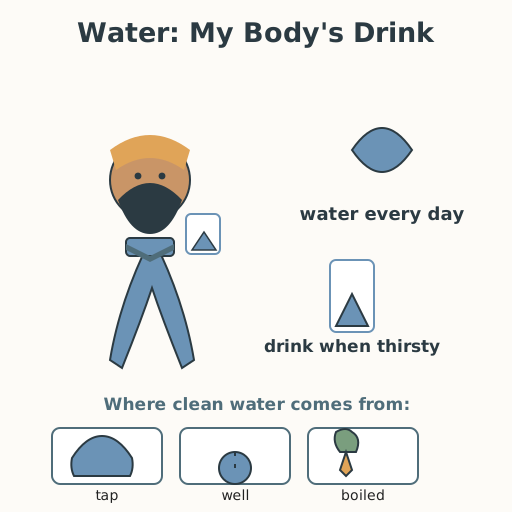
Your body is mostly water, and it needs water every single day — to play, to think, to stay cool in the heat, and to stay well. When your mouth feels dry and your body says “drink,” that is thirst, your body’s way of asking for water. Today you will learn why water matters and practice listening to your own thirst.
Materials
- A clear cup or bottle of water for each learner
- A “thirsty body” chart
Preparation
- Ensure there is safe drinking water for learners to drink.
- Prepare a “thirsty body” chart (playing, hot weather, waking up, during a meal).
- Plan for any learner who cannot easily drink on their own — a caregiver, older peer, or a cup with a straw may help; the goal is water when thirsty, not drinking alone.
Facilitator note
This lesson is written to the learner (“you”). Water is a human need and a question of justice, not a personal failing. Teach why water matters and how to answer thirst, then hold the global truth gently: many people do not have clean water to drink, and that is a fairness problem we can work on — not something to make any learner feel ashamed of their own home. Never shame a learner for being thirsty or for having little water at home. How much water a body needs varies with weather, activity, and the person, so “drink when thirsty” is the rule, not a fixed amount. A learner who cannot drink on their own is helped without comment; a learner who does not use a speaking voice signs or points “drink” and shows thirst. A learner who is blind or has low vision feels the cup and the water’s coolness and hears thirst named by body signs — a dry mouth, a warm tired feeling — so the idea lives in the body, not only in the chart. A learner who is deaf or hard of hearing follows the chart and demonstrations from the front, since every idea is shown in pictures. The health facts are from the World Health Organization: water is essential to life, and safe drinking-water keeps bodies well. This lesson begins the unit’s D03.S3.02.02 water objective and links forward to handwashing, which also needs clean water.
Procedure
- Gather (5 min). Put your hand on your chest and breathe. Your body is mostly water — and it needs water every day to work well.
- Why does my body need water? (10 min). Water helps your body play, think, stay cool when it is hot, and stay well. Without water, a body quickly feels bad. Water is your body’s everyday drink.
- What is thirst? (10 min). A dry mouth, a tired feeling, wanting a drink — that is thirst, your body’s way of asking for water. Point to the “thirsty body” chart: you may be thirsty after playing, in hot weather, when you wake up, and during a meal.
- Drink when thirsty (10 min). Notice your own body right now. Are you thirsty? If you are, drink some water. Drinking when thirsty is how you answer your body’s call. If you are not thirsty now, remember the feeling so you will know it later.
- Water is precious and not for everyone (5 min). In some places, clean water comes from a tap; in others, from a well or a boiled kettle; in others, people must walk far to carry water, and the water may not be clean. That is not fair. We can honor water by using just enough, never wasting it, and sharing when there is enough.
- Close (5 min). Say it together: “Water keeps my body well. I drink when I am thirsty, and I honor water by not wasting it.”
Differentiation
- Support: Use the thirsty body chart to practice one “I’m thirsty” signal; drink together, then alone.
- Support (non-speaking): Practice a sign or a point for “drink” and “thirsty”; use the picture chart to show thirst.
- Support (blind/low-vision): Name thirst by body feel — a dry mouth, a warm tired feeling — and let the learner feel the cup and the water; name the drink-when-thirsty times aloud together.
- Support (motor-difference): A caregiver or peer helps hold the cup or offers a straw; the learner leads by showing thirst and drinking what they can.
- Extension: Draw where water comes from at home and one way to avoid wasting it.
Assessment
- Formative (observation): Can the learner say or show why the body needs water and notice or name their own thirst?
- Self: The learner drinks when thirsty and names one time their body asks for water.
Home connection
At home, notice one time your body feels thirsty today and drink water when it does. Ask a grown-up where your family’s water comes from and one way to save it.
Resources
- World Health Organization, “Drinking-water” (safe water and health): https://www.who.int/news-room/fact-sheets/detail/drinking-water