Lesson 05 — Why We Wash Our Hands
Learners move beyond doing the handwashing steps to explaining why they work: soap and water carry away germs that cause sickness. They name the key times to wash and practice a complete wash, all while honoring water-scarce places and every body.
Objectives
Objectives
- D03.S4.02.01 Explain why handwashing, tooth-brushing, and rest help prevent sickness and keep the body well.
Essential question
Why does washing my hands with soap and water help keep me and others from getting sick?
Key vocabulary
Materials
Standard materials
- Soap and water · 1 station A sink, basin, bucket, or pour jug with safe water and soap (or ash)
- A towel or clean cloth · per learner For drying hands
Low-tech / no-cost
- A bucket or bowl of water and soap or ash Handwashing works with running water, a pour jug, or ash when soap is scarce; demonstrate with what is available
- Voice and body Practice the handwashing motions in the air while naming why we wash; no water needed to learn
Enriched / lab & device
- Glitter or washable paint · small amount A pinch on hands shows how soap and water carry "germs" away
- A handwashing timer or short song · 1 A 20-second song or timer so learners wash long enough
Works in different contexts
- large-group Demonstrate the "why" once at a visible station, then send small groups to wash while others practice the motions and explain the reason
- self-directed A learner washes alone, singing to time the scrub, then checks their own hands and says why they washed
- outdoor-only Wash at an outdoor tap, a safe stream, or a shared jug; conserve water by wetting, lathering with the water off, then rinsing
- multi-age Older learners explain the "why" to younger ones and check that fingers, thumbs, and wrists are scrubbed
- level-grouped Learners who can explain the reason wash and teach it; others practice the motions and repeat the reason with support
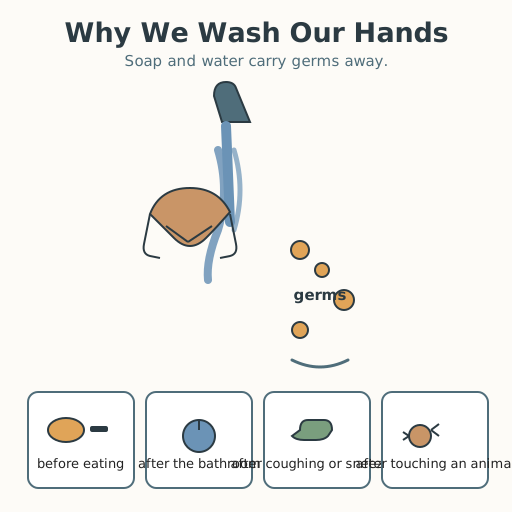
Lesson 5 — Why We Wash Our Hands
Summary
Learners already know how to wash their hands from Grade 1; now they learn why it works. Soap and water carry away germs that cause sickness, and washing at the right times — before eating, after the bathroom, after coughing or sneezing, and after touching an animal — protects the washer and everyone around them. Water is honored, never wasted.
Objectives
- Explain why handwashing, tooth-brushing, and rest help prevent sickness and keep the body well. (D03.S4.02.01)
Connection
Your hands touch doors, pets, the ground, and your food — and they pick up tiny germs too small to see. Germs can make bodies sick. Washing your hands with soap and water carries those germs away. Today you will learn the why behind the washing you already know how to do.
Materials
- Soap and water (a sink, basin, bucket, or pour jug with safe water)
- A towel or clean cloth for drying
Preparation
- Set up a handwashing station with safe water and soap (or ash, if soap is scarce).
- Have a short 20-second song ready to time the scrub.
- Plan how water will be conserved — where water is scarce, use the wet–lather–rinse method.
Facilitator note
This lesson is written to the learner (“you”). Grade 1 taught the how; Grade 2 adds the why, so this is explanation building on a known skill — use explicit instruction and a worked example of the reason (“soap lifts germs off the skin, and water carries them away”), then let learners explain it back in their own words. Honor every context: where water is scarce, teach the “wet, lather, rinse” method that saves water, and note that ash can work when there is no soap. Where a learner cannot wash their own hands, a caregiver or older peer can help — the goal is clean hands, not doing it alone. Care is never a test. A learner who does not use a speaking voice points or signs; a learner who is blind or has low vision is guided hand-over-hand and explains the reason aloud. A learner who is deaf or hard of hearing follows the demonstration and picture step cards from the front, since every step is shown, not only told. The health facts are from the World Health Organization: washing hands with soap removes germs and is one of the most effective ways to prevent the spread of sickness. This lesson starts the D03.S4.02.01 “why” trio (wash, brush, rest).
Procedure
- Gather (5 min). Think of everything your hands touched today. Hands pick up tiny germs — living things too small to see — that can make bodies sick.
- Why does washing work? (10 min). Soap loosens and lifts germs off your skin, and water carries them away down the drain. That is why we scrub every part: palms, backs, between fingers, thumbs, wrists, and under nails — so no germs are left behind.
- Practice the motions and the reason (5 min). In the air, practice wet, lather, scrub, rinse, dry. As you scrub, say why: “Soap and water carry germs away.”
- Wash for real (10 min). Go to the station and wash your hands, scrubbing about 20 seconds — the length of a short song. Then check: did I miss a spot?
- When do we wash, and why? (10 min). Name the times washing matters most: before eating, after the bathroom, after coughing or sneezing, and after touching an animal. Washing then stops germs before they can reach a mouth, a nose, or another person. Tell a partner one time and why it matters.
- Close (5 min). Clean hands protect you and the people around you. Washing is a small act of care for everyone.
Differentiation
- Support: Practice the motions in the air first, then wash together once before trying alone; use a picture step card.
- Support (deaf/hard-of-hearing): Stand where the learner can see your face and hands; pair each step with its picture card and a clear visual model.
- Support (motor-difference): A caregiver or peer assists with parts that are hard, while the learner leads and explains the reason as much as they can.
- Extension: Teach the “why” to someone younger, and name one more way to save water while washing.
Assessment
- Formative (observation): Can the learner explain why washing helps prevent sickness and name one key time to wash, in their own way?
- Self: The learner checks their own hands after washing and says why they washed.
Home connection
Wash your hands before one meal today and tell a grown-up why washing keeps you and your family from getting sick.
Resources
- World Health Organization, “Hand hygiene” (why and how to clean hands): https://www.who.int/teams/integrated-health-services/infection-prevention-control/hand-hygiene