Lesson 10 — Fairness & Our Shared Rules, All Together
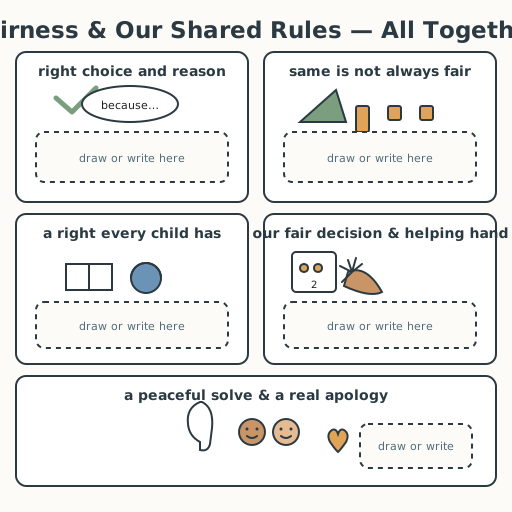
Learners bring the whole unit together in a five-part "fairness" page — a right choice and reason, same-is-not-always-fair, a child's right, a fair decision and a helping hand, and a peaceful solve with a real apology — and share it as a class book.
Objectives
Objectives
- D09.S1.02.01 Tell the difference between something that is right to do and something that is wrong to do, and give a reason.
- D09.S1.02.02 Explain how a kind or unkind act affects another person's feelings.
- D09.S2.02.01 Explain why treating everyone the same is not always fair, using an example like different needs.
- D09.S2.02.02 Name a right that children have, such as the right to play or learn, and why it matters.
- D09.S3.02.01 Explain how a group makes a fair decision together, such as talking it through or taking a vote.
- D09.S3.02.02 Identify a way people in their community help one another, such as a food drive or cleanup, and how they could join in.
- D09.S4.02.01 Describe a conflict and a peaceful way to solve it, such as talking, taking turns, or getting help.
- D09.S4.02.02 Explain what makes an apology real, such as meaning it and trying to fix the harm.
Essential question
How do I practice fairness and our shared rules, all together?
Key vocabulary
Materials
Standard materials
- A five-part "fairness" page per learner · per learner A page with five boxes: "right choice and reason," "same is not always fair," "a right every child has," "our fair decision and a helping hand," and "a peaceful solve and a real apology"
- Crayons and drawing tools · per learner
- Stapler, string, or clips · 1 set For gathering pages into a class "Fairness & Our Shared Rules" book
Low-tech / no-cost
- One large shared sheet A single paper or cloth divided into five parts, filled together
- Voice and body Each learner tells (or signs) their five-part page and points to the box they are sharing
Enriched / lab & device
- Individual "Fairness" books · 1 per learner Five small pages bound together for a keepsake book to take home
- A class display with photos or audio · 1 display A wall or recording that gathers every learner's five-part page
Works in different contexts
- large-group Learners fill their five boxes, then share in small circles and contribute one box each to a shared class book
- self-directed The learner completes all five boxes alone, then shares the finished page with a grown-up or peer
- outdoor-only Build the five-part page on the ground with found objects in five marked circles, then share aloud
- multi-age Older learners scribe or help younger ones draw each box while the younger learner gives the idea
Lesson 10 — Fairness & Our Shared Rules, All Together
Summary
Learners gather everything from the unit into one five-part “fairness” page: a right choice and its reason, same-is-not-always-fair, a right every child has, a fair decision and a helping hand, and a peaceful solve with a real apology. They share their page and build a class “Fairness & Our Shared Rules” book.
Objectives
- Tell the difference between something that is right to do and something that is wrong to do, and give a reason. (D09.S1.02.01)
- Explain how a kind or unkind act affects another person’s feelings. (D09.S1.02.02)
- Explain why treating everyone the same is not always fair, using an example like different needs. (D09.S2.02.01)
- Name a right that children have, such as the right to play or learn, and why it matters. (D09.S2.02.02)
- Explain how a group makes a fair decision together, such as talking it through or taking a vote. (D09.S3.02.01)
- Identify a way people in their community help one another, such as a food drive or cleanup, and how they could join in. (D09.S3.02.02)
- Describe a conflict and a peaceful way to solve it, such as talking, taking turns, or getting help. (D09.S4.02.01)
- Explain what makes an apology real, such as meaning it and trying to fix the harm. (D09.S4.02.02)
Connection
Fairness is not one big thing — it is many small things you can do every day: telling right from wrong with a reason, remembering that same is not always fair, honoring every child’s rights, deciding together, lending a helping hand, and going from conflict to repair with a real apology. When you put them together, you are practicing how to live well with other people — at home, in class, and anywhere on Earth people are together. Today you will put them all together.
Materials
- A five-part “fairness” page per learner
- Crayons and drawing tools
- Stapler, string, or clips for a class book
Preparation
- Prepare a five-box page for each learner (or one large shared sheet): “right choice and reason,” “same is not always fair,” “a right every child has,” “our fair decision and a helping hand,” and “a peaceful solve and a real apology.”
- Set up a gathering place and a spot to assemble the class book.
Facilitator note
Written to the learner (“you”). This is the unit’s capstone: each learner authors their own small statement of fairness and shared rules. Keep all five boxes optional in depth — a word, a mark, or a drawing counts. This is a celebration of what learners can do, not a test of what they know; there is no “correct” page. Celebrate each page as a real contribution, and never rank pages against one another. A learner who does not speak aloud shares by pointing to a box and to a picture or by signing; a learner who is blind or low-vision describes their page aloud and the boxes are read back to them; a learner with a motor difference can have a partner draw while they choose and direct. Every voice matters — not just the loudest or fastest — and a learner may always pass. The decision chart, the community-help plan, and the “conflict to repair” strip stay live after this lesson, so the unit’s habits continue beyond the page. Questions stay questions: fairness is practiced, not preached.
Procedure
- Gather (5 min). Remember the unit: right and wrong with a reason, how acts reach feelings, same-is-not-always-fair, children’s rights, deciding together, helping hands, conflicts and peaceful solves, and real apologies. You have practiced all of it.
- Fill the five boxes (20 min). On your page, draw or write one thing in each box: a right choice and its reason; why same is not always fair; one right every child has and why it matters; a fair decision you helped make and one helping hand; and a peaceful solve with a real apology.
- Share (10 min). With a partner or small group, show your page and tell about one box you are proud of. Listen to theirs.
- Make the class book (5 min). Add your page to the “Fairness & Our Shared Rules” book or wall. Now everyone’s fairness is together.
- Close (5 min). Fairness is many small things you can do every day. Your choices matter — to your friends, your community, and you.
Differentiation
- Support: Complete one box at a time with a grown-up scribe; a single word or mark in each box counts. A non-speaking learner points to pictures for each box.
- Extension: Invite learners to add a sixth box: “tomorrow” — one fair or caring thing they will do next.
Assessment
- Summative (portfolio): The five-part “fairness” page shows a right choice and reason, same-is-not-always-fair, a child’s right, a fair decision and helping hand, and a peaceful solve with a real apology.
- Observation: Does the learner connect each box to the right idea from the unit and share it in their own words?
Home connection
Take your “fairness” page home and share one box with your family. Ask them what fairness means to them, and listen.