Lesson 03 — Alike and Different — and Why Both Matter
Learners pair up and find two ways they are alike and two ways they are different, then explain why both matter: being alike helps us understand each other, and being different brings new gifts no one else can give.
Objectives
Objectives
- D01.S2.02.02 Describe how they are alike and different from others and why both matter.
Essential question
How am I like my classmates and how am I different — and why do both matter?
Key vocabulary
Materials
Standard materials
- A "Two True Things" partner sheet · 1 per pair Two boxes — one for two ways we are alike, one for two ways we are different
- Crayons, pencils · per learner
Low-tech / no-cost
- Voices and bodies Stand facing a partner and name two ways you are alike and two ways you are different, aloud or in sign
- A shared object Pass a stone or stick — say one alike thing, then one different thing
Enriched / lab & device
- A class "alike and different" wall Post pairs of facts the class finds, showing the whole room's range of gifts
- Camera or tablet · 1 per group Photograph partners pointing to something alike and something different
Works in different contexts
- large-group Do the partner walk as a whole group, then gather pairs' findings onto a shared chart of alike and different
- self-directed A learner thinks of one person they know and writes or draws two ways they are alike and two ways they are different
- outdoor-only Compare two leaves or stones — two ways they are alike, two ways different — then turn the same eye on a friend
- multi-age Pair older and younger learners to find their alike-and-different facts together, then share one of each
- level-grouped Learners ready to extend name why *both* matter, in their own words, and give an example from the year
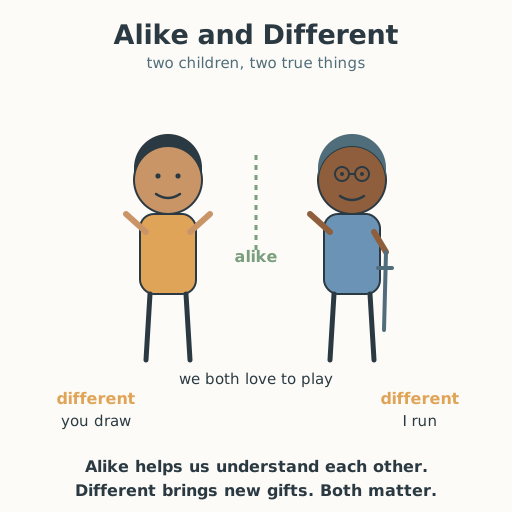
Lesson 3 — Alike and Different — and Why Both Matter
Summary
Learners pair up and become detectives of each other: they find two true ways they are alike and two true ways they are different. Then they explain why both matter — being alike helps us understand each other, and being different brings gifts only that person can give. This spirals back to the opening unit and gathers the year’s lesson that difference is not a ranking but a richness.
Objectives
- Describe how they are alike and different from others and why both matter. (D01.S2.02.02)
Connection
Everywhere people live, you can find two people who are alike in some ways and different in others. Two farmers may both love to grow food — alike — while one grows rice in a wet field and the other grows wheat on a dry plain — different. A city child and a mountain child may both love stories — alike — yet tell them in different languages and different ways. Alike helps us feel “you are like me.” Different means “you bring something I do not have.” Both are true, and both are gifts.
Materials
- A “Two True Things” partner sheet
- Crayons and pencils
Preparation
- Prepare the “Two True Things” sheet with two boxes: “two ways we are alike” and “two ways we are different.”
- Arrange learners in pairs, mixing pairs across the room so they meet someone new.
- Set out crayons and pencils.
Facilitator note
This lesson is written to the learner (“you”). It spirals back to the opening unit’s “alike and different” work, now with the added question why both matter. The egalitarian commitment is firm: difference is never a ranking. No way of being is better than another — alike is not “better” than different, and no learner’s fact is above another’s. Guide pairs to find true, kind facts (likes, abilities, families, languages, ways of moving) and steer away from facts that sort people into higher and lower. For a learner who is blind or has low vision, focus on facts heard, felt, and spoken rather than seen. For a learner who does not use a speaking voice, accept pointing, signing, drawing, or a partner voicing. The goal is that every learner can say, in their own way, one alike thing and one different thing that both matter.
Procedure
- Gather (5 min). Today you will be detectives — of how you are like a friend and how you are different. Both are true, and both are worth finding.
- Meet your partner (5 min). Sit with a partner — someone you may not know well. You will discover two true ways you are alike and two true ways you are different.
- Find “alike” (10 min). Talk together: what do you both love to do? What food, game, or story do you both enjoy? What makes you both smile? Write or draw two alike things in the “alike” box.
- Find “different” (10 min). Now look for what is different: one of you draws and the other runs; one speaks a language the other is learning; one has a big family and the other a small one. Write or draw two different things. Remember: different is not better or worse — it is just different.
- Why both matter (10 min). Tell each other: why do alike and different both matter? Alike helps us understand each other — “you are like me.” Different brings new gifts — “you can do what I cannot.” Say it in your own words.
- Close (5 min). The room is full of people who are alike in some ways and different in others. That is not a problem to fix. It is the richness of the whole year, gathered in one room.
Differentiation
- Support: Offer a menu of example facts to choose from; scribe the words a learner says.
- Support (non-speaking): Point, draw, or sign the facts; a partner writes or voices them.
- Support (blind/low-vision): Use heard, felt, and spoken facts rather than visual ones.
- Extension: Name why both matter in your own words and give one example from the year where someone’s difference was a gift to the group.
Assessment
- Formative (observation + peer): Can the learner name two ways they are alike with a partner and two ways they are different, and say in their own words why both matter?
Home connection
Ask someone at home one way you are alike and one way you are different, and tell them why both matter.
Resources
- CASEL SEL Framework (social awareness): https://casel.org/fundamentals-of-sel/