Lesson 05 — Thirst and Tiredness
Learners meet the remaining two body signals: thirst and tiredness. They learn the early signs — a dry mouth and lips for thirst, heavy eyelids and yawning for tiredness — and name one helpful response to each (drink water, rest). They close by drawing the two signals.
Objectives
Objectives
- D03.S1.03.02 Recognize early body signals of hunger, fullness, thirst, and tiredness and say one helpful response to each.
Essential question
What are the early signals of thirst and tiredness, and what helpful response does each one ask for?
Key vocabulary
Materials
Standard materials
- Signal cards · 1 set Four cards — dry mouth (thirst), heavy eyelids and yawning (tiredness), a water glass (response), and a resting child (response)
- A cup of clean water · per learner To answer thirst during the lesson if a learner needs it
- Paper and crayons · per learner To draw the thirst and tiredness signals
Low-tech / no-cost
- Your own body Feel your mouth and eyes and name what they are telling you right now
- Voice Say each signal and its response aloud together
Enriched / lab & device
- A signal-and-response sorting game · 1 set Cards to sort into thirst and tiredness, each matched to drink water or rest
- A picture book about rest and sleep · 1 To read together about why bodies need water and sleep
Works in different contexts
- large-group Hold each card high and have the group point to their mouth or eyes, then call the helpful response together
- self-directed A learner sorts the cards into thirst and tiredness, matches each to a response, and draws their own two signals
- outdoor-only After a warm walk or a game, notice a dry mouth (thirst) and heavy limbs (tiredness), and name the response for each
- multi-age Older learners read the cards while younger learners act out a dry mouth or heavy eyelids, then everyone matches a response
Lesson 5 — Thirst and Tiredness
Summary
Learners meet the last two body signals of the unit: thirst and tiredness. They learn the early signs of each — a dry mouth and lips for thirst, heavy eyelids, yawning, and a slow body for tiredness — and name one helpful response to each. They close by drawing the two signals.
Objectives
- Recognize early body signals of hunger, fullness, thirst, and tiredness and say one helpful response to each. (D03.S1.03.02)
Connection
Have you ever been playing hard on a warm day and noticed your mouth feels dry and you really want a drink? That is thirst. Or have you felt your eyelids getting heavy and your body slow at the end of a long day? That is tiredness. Just like hunger and fullness, these are your body’s signals — and each one has a kind answer.
Materials
- Signal cards (dry mouth, heavy eyelids and yawning, a water glass, a resting child)
- A cup of clean water per learner
- Paper and crayons
Preparation
- Print or draw the four signal cards.
- Set out cups of clean water.
- Prepare paper and crayons for the closing drawing.
Facilitator note
This lesson is written to the learner (“you”) so it works in a classroom and for a self-directed learner. Prepare the cards and water, then guide the matching and drawing. This completes the four body signals the unit teaches (hunger and fullness came in Lesson 4). Model the response to thirst by making water freely available — a learner may drink whenever their body asks, with no need to ask permission. Keep tiredness gentle: tiredness is a normal body signal, not laziness, and rest is a real need, not a reward to be earned. Some learners do not sleep well at home; frame rest with kindness, never blame. Bodies differ — some need more water or more sleep than others — and every amount is respected. Drinking water when thirsty is a healthy habit the World Health Organization and health authorities around the world encourage for everyone.
Procedure
- Gather (5 min). Think back: last time you learned hunger and fullness. Today you will learn two more signals your body sends.
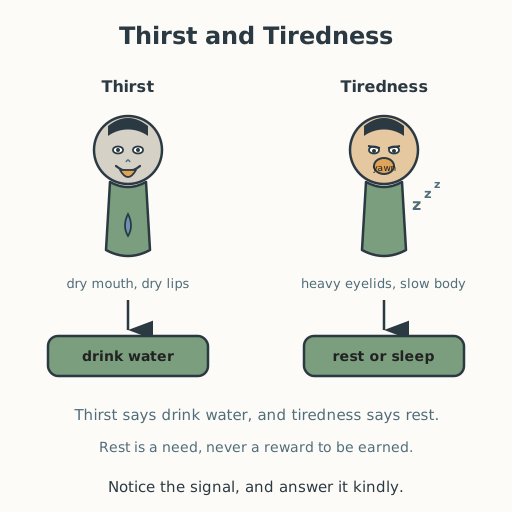
- Meet thirst (10 min). Thirst is your body asking for water. Its early signals: your mouth and lips feel dry, and you may find it hard to swallow. What is a helpful response? Drink clean water. Notice the signal early, and answer it.
- Meet tiredness (10 min). Tiredness is your body asking for rest. Its signals: your eyelids feel heavy, you yawn, and your body feels slow. What is a helpful response? Rest or sleep. Rest is not lazy — it is how your body recharges.
- Match the signals (10 min). Sort the four cards into thirst and tiredness, and match each to its response: thirst → drink water; tiredness → rest. Point to your own mouth for thirst and your own eyes for tiredness.
- Draw your two signals (10 min). Draw your dry mouth asking for water, and your heavy eyelids asking for rest. Write one helpful response under each.
- Close (5 min). Say it together: “when I am thirsty, I drink water; when I am tired, I rest.” Listening to your body is a way of being kind to it.
Differentiation
- Support: Introduce one signal at a time and act it out together; accept spoken or drawn answers.
- Extension: Ask learners to notice how a tired body and a hungry body can feel a little alike (low energy), and to name which signal they think they are feeling and why.
Assessment
- Formative (observation/self): Can the learner name one signal of thirst and one signal of tiredness, and a helpful response to each?
Resources
- World Health Organization — global health and wellbeing reference: https://www.who.int/
Home connection
At home, notice your mouth and your eyes through the day. When you feel thirsty, drink water; when you feel tired, rest — and tell someone which signal you noticed.