Lesson 07 — Moving with Rhythm
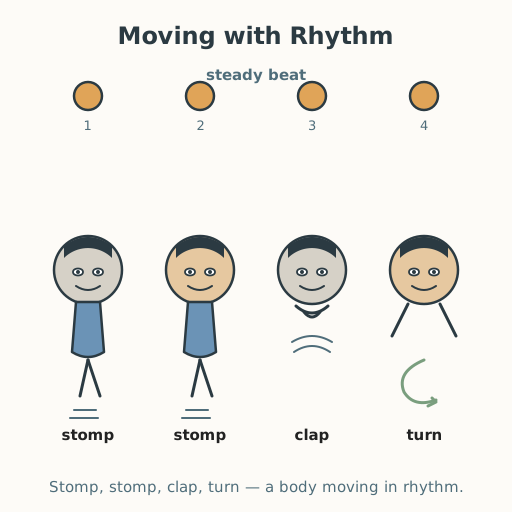
Learners discover rhythm and move to it. They make a steady beat with their hands, then build and perform a short four-move sequence — such as stomp, stomp, clap, turn — in time with the beat, moving their bodies in rhythm in their own way.
Objectives
Objectives
- D03.S2.03.01 Perform a short movement sequence, such as a dance or obstacle course, with rhythm and balance.
Essential question
How does my body move with rhythm in a short sequence?
Key vocabulary
Materials
Standard materials
- A beat source · 1 Clapping hands, a drum, a shaker, or a steady-beat song
- A clear floor space · 1 per group Enough room to step and move in place safely
- Sequence cards · 1 set Cards showing step, stomp, clap, pat, and turn to build a rhythm sequence
Low-tech / no-cost
- Your own body and voice Clap, pat, and stomp a steady beat, and move to the sound of your own voice
- Two stones or sticks Tap a steady beat on the ground as your rhythm
Enriched / lab & device
- A music player with steady-beat songs · 1 Songs from different places with a clear, steady beat to move to — for example a West African drumming song, a Latin American clapping song, or a South Asian dance beat
- Rhythm picture cards · 1 set Durable cards for building and reordering rhythm sequences
Works in different contexts
- large-group Lead a whole-group beat first — everyone claps together — then small groups build and perform their own rhythm sequences
- self-directed A learner makes a steady beat with their hands, builds a four-move rhythm sequence, and performs it for a mirror or recording
- outdoor-only Make the beat by tapping a stick on the ground or a stone on stone, and step the rhythm across a clear outdoor space
- multi-age Older learners keep the beat while younger learners move to it, then they switch roles
Lesson 7 — Moving with Rhythm
Summary
Learners meet rhythm. They make a steady beat with their hands, then build and perform a short four-move sequence — such as stomp, stomp, clap, turn — in time with the beat. Rhythm is the “heartbeat” of movement, and every body can move to it in its own way.
Objectives
- Perform a short movement sequence, such as a dance or obstacle course, with rhythm and balance. (D03.S2.03.01)
Connection
Have you ever clapped along to a song, or tapped your foot without thinking about it? That is rhythm — a steady beat your body can feel and join. People everywhere make rhythm: djembe drumming in West Africa, taiko drumming in Japan, bhangra dance from the Punjab, and the clapping games children play in every land — from a city street to a village square. Today you will move your own body to a beat of your own.
Materials
- A beat source (clapping, a drum, a shaker, or a steady-beat song)
- A clear floor space
- Sequence cards (step, stomp, clap, pat, turn)
Preparation
- Clear a safe floor space.
- Choose a beat source, or plan to clap a steady beat together.
- Prepare sequence cards showing step, stomp, clap, pat, and turn.
Facilitator note
This lesson is written to the learner (“you”) so it works in a classroom and for a self-directed learner. Prepare the space and beat source, then lead the steady beat before learners build their own sequences. This begins the movement strand, which builds on Grade 2’s movement sequences — now with rhythm added. Model a steady beat and a four-move sequence slowly before learners try (explicit modeling, then guided practice). Honor every body: rhythm can be made by clapping, tapping, blinking, rocking, or rolling — and a sequence can be performed standing, seated, or with wheels. Every version counts fully. Keep it joyful, never a competition: there is no “best” rhythm, only a steady one. Learners who are deaf or hard of hearing can feel the beat through the floor or a drum they touch; learners with low vision can follow a hand-held beat — rhythm is felt, not only heard.
Where a music player is used, notice the difference: a player can bring a beat from anywhere in the world, but it needs a battery or a wall and was made in a factory far away — while your own body makes a steady beat with nothing but itself. Both are welcome; only your body can feel the beat the way you do.
Procedure
- Gather (5 min). Listen — can you feel a beat anywhere right now? Your own heartbeat is a quiet rhythm. Today you will make rhythm and move to it.
- Make a steady beat (10 min). Clap a steady beat together: clap, clap, clap, clap — even and the same, like a heartbeat. Try it slowly, then a little faster. Pat your knees, then stomp your feet — the beat stays steady.
- Learn a rhythm sequence (10 min). Watch and follow a four-move sequence in time with the beat: stomp, stomp, clap, turn. Each move lands on one beat. Say the words as you move.
- Build your own sequence (10 min). Choose four moves from the cards and put them in order — maybe clap, pat, stomp, turn, or step, step, clap, spin. Practice it in time with the beat, slowly at first.
- Perform (10 min). Perform your rhythm sequence for a partner, a mirror, or the group. Watch your friends and keep the beat with them. Every sequence is good.
- Close (5 min). Say it together: “my body can move with rhythm.” How did it feel to move in time with the beat?
Differentiation
- Support: Use a two-move sequence (stomp, clap) repeated, with an adult or partner keeping the beat; accept seated or rocking versions.
- Extension: Ask learners to perform their sequence once slowly and once faster, keeping the same steady beat, or to lead the beat for a partner.
Assessment
- Formative (observation/performance): Can the learner perform a short movement sequence in time with a steady beat, in their own body’s way?
Resources
- World Health Organization — physical activity fact sheet (children need regular movement for healthy growth): https://www.who.int/news-room/fact-sheets/detail/physical-activity
Home connection
Make a beat at home — clap or tap a table — and teach your rhythm sequence to someone. See if you can keep the beat steady together.