Lesson 07 — Working Together to Change Something Unfair
Learners hear the gentle, hopeful story of the 1930 Salt March, when thousands of people walked peacefully together to change an unfair rule, and describe the steps they took — notice, work together, act peacefully, and change it — ending in hope, never blame.
Objectives
Objectives
- D08.S4.03.01 Describe a story, real or told, of people working together to change something unfair, and the steps they took.
Essential question
What is a story, real or told, of people working together to change something unfair, and what steps did they take?
Key vocabulary
Materials
Standard materials
- A picture set of the Salt March story · 1 set Cards showing people noticing an unfair rule, a long line of people walking peacefully to the sea, and people making salt at the shore — the shape of the 1930 Salt March
- Paper and crayons · per learner For drawing the steps people took and one sentence about why it mattered
Low-tech / no-cost
- A told story and acting Tell the story of the Salt March; learners act noticing, walking together, and making salt at the shore
- A bowl of water and salt Watch salt dissolve, then imagine people walking to the sea to gather their own salt — the story made real in your hands
Enriched / lab & device
- A gentle picture book or short video about peaceful change · 1 A book or clip about the Salt March, Wangari Maathai, or the bus boycott, told warmly and without frightening detail
- A photo set of peaceful marches · 1 set Optional — photos of people walking together peacefully for a fair change, across many countries
Works in different contexts
- large-group Tell the story once, then the whole group walks a short "march" together and a few learners retell one step each
- self-directed The learner reads or listens to the story, draws the steps, and tells a grown-up or peer why it mattered
- outdoor-only Walk together outside in a line, then gather a pinch of soil or sand to show "making something ourselves," and retell the steps
- multi-age Older learners read the story and scribe the steps, while younger learners act noticing, walking, and making
- level-grouped Learners who grasp the story quickly coach peers by asking "what did they do first? what did it change?" rather than telling
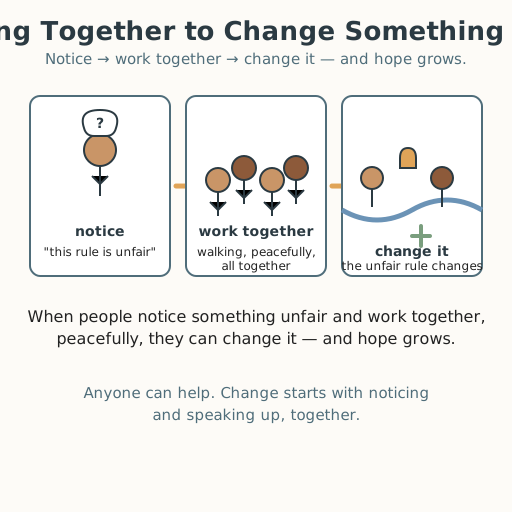
Lesson 7 — Working Together to Change Something Unfair
Summary
Learners hear the gentle, hopeful story of the 1930 Salt March, when Mohandas Gandhi and thousands of ordinary people walked peacefully together to the sea to make their own salt and change an unfair rule. They describe the steps — notice the unfairness, work together, act peacefully, and change it — a first, age-appropriate story of collective, nonviolent change, ending in hope, never blame.
Objectives
- Describe a story, real or told, of people working together to change something unfair, and the steps they took. (D08.S4.03.01)
Connection
Sometimes people notice something that is not right — an unfair rule, someone being left out — and instead of looking away, they work together to change it. One such story comes from India in 1930: there was an unfair rule that said people had to buy salt only from certain sellers and pay a heavy tax, and they were not allowed to gather salt from the sea themselves. Thousands of ordinary people decided to change it — by walking together, peacefully, to the sea to make their own salt.
Materials
- A picture set of the Salt March story (notice, walk together, make salt)
- Paper and crayons
Preparation
- Prepare the story accurately and gently (see Resources): In 1930, Mohandas Gandhi led a 240-mile (about 385-km) march to the sea at Dandi, India, to protest an unfair salt law; he and thousands of others peacefully gathered and made their own salt in defiance of the rule, part of the larger movement for India’s independence. Keep the telling warm and nonviolent — no frightening content.
- Prepare or draw the picture cards (an unfair rule noticed, a long line of people walking, making salt at the shore).
Facilitator note
This lesson is written to the learner (“you”). Tell the story gently and hopefully. The Salt March is real and well-documented (see Resources), and its shape is right for this age: notice an unfair rule, gather, walk peacefully, act, and change it — without fighting. Keep it nonviolent and blame-free: do not dwell on punishment or suffering; the lesson’s power is in ordinary people, working together, and the hope of change. The “steps” are the learning: notice → work together → act peacefully → change it. Model the steps once (Kirschner, Sweller & Clark, 2006), then let learners retell them. Distinguish evidence from values: that the march happened and the rule was unfair is fact (see Resources); that changing unfairness together and peacefully is good is a value we hold together. Offer Wangari Maathai (Grade 2 retrieval) and the Montgomery bus boycott as other examples of the same shape, so learners see this pattern across many peoples. No child is ever the problem, and no one must share a personal unfairness. Honor every body: a learner who cannot see the cards hears the story told clearly; a learner who does not use a speaking voice acts or points.
Procedure
- Gather (5 min). Have you ever seen something unfair and wished it could change? What would it take to change it?
- Hear the story (15 min). Listen. Long ago in India, there was an unfair rule about salt: people had to buy it from certain sellers and pay a heavy tax, and they could not gather salt from the sea themselves. Gandhi and thousands of ordinary people noticed this was unfair. They walked together, peacefully, a very long way to the sea. At the shore, they gently made their own salt from the sea water, showing the rule was unfair. Many people joined, and over time the unfair rule was changed.
- Name the steps (10 min). Say them in order, pointing to the cards: notice the unfair rule; work together; act peacefully (walk, make salt); change it — and hope grows.
- Draw and tell (10 min). Draw the steps — or one step — and write or tell one sentence about why it mattered.
- Close (5 min). Anyone can help change something unfair — by noticing, and by working together, peacefully. That is how change begins.
Differentiation
- Support: Tell just three beats (notice, walk together, change) and ask one question: “What did they do to change it?”
- Support (blind/low-vision): Hear the story told clearly and describe the steps aloud; feel a bowl of water and salt as the story’s image.
- Support (non-speaking): Act out noticing, walking, and making salt, and point to the story cards in order.
- Support (Deaf/HH): Tell the story with the picture sequence and signs — the pictures carry it; sign “unfair,” “together,” and “change” as you go.
- Support (motor-difference): Direct a partner to act or point while you sign or eye-gaze; use a large, stable picture set.
- Extension: Think of one small unfair thing near you and one peaceful first step someone could take — tell why it might help.
Assessment
- Formative (observation): Can the learner retell at least three steps the people took (notice, work together, act peacefully, change it)?
- Formative (portfolio/oral): Does the learner say why it mattered, in their own words, with hope rather than blame?
Resources
- Britannica, “Salt March” — documents that in March–April 1930 Mohandas Gandhi led a march of about 240 miles to the sea at Dandi, India, to protest the British salt laws, and that he and others made salt from seawater in peaceful defiance of the rule, part of the movement for Indian independence. https://www.britannica.com/event/Salt-March
Home connection
At home, tell someone the story of the Salt March and the steps the people took. Ask them: what is one small unfair thing, and one peaceful first step someone could take together to change it?