Lesson 08 — One Resource — Where It Comes From, and Using Less
Learners trace one resource people use every day — water, wood, or electricity — from where it comes from to how it reaches us, and name one way to use less of it: turning off the tap or the light, or reusing what we have. They learn that knowing where a resource comes from is the first step to using it with care.
Objectives
Objectives
- D10.S4.03.02 Name one resource people use every day, where it comes from, and one way to use less of it.
Essential question
What is one resource people use every day, where does it come from, and how can I use less of it?
Key vocabulary
Materials
Standard materials
- Where it comes from — picture cards · 1 set A resource traced from its source to use — water (rain → river or well → tap), wood (tree → wood → table), electricity (power → wire → light) — plus a "use less" action for each
- Paper and crayons · per learner For drawing one resource, where it comes from, and one way to use less of it
Low-tech / no-cost
- A real resource and its source A cup of water (from rain, a river, or a well) and a leaf or stick (from a tree); say where it comes from and one way to use less; no printed cards needed
- Voice and body Act out using a resource (turning on a tap, switching on a light) and then using less (turning it off); name the resource and where it comes from
Enriched / lab & device
- Real objects to trace · 1 set A cup of water, a wooden spoon, a metal spoon — trace each back to where it comes from
- A device to see one resource's journey · 1 per group Optional — follow water from rain to tap, or wood from tree to table
Works in different contexts
- large-group Trace one resource's journey big — rain to river to tap — and the whole group calls out where it comes from and one way to use less
- self-directed A learner chooses one resource, draws where it comes from, and writes or says one way to use less of it
- outdoor-only Find water outside (rain, a river, a well) or a tree, and name where it comes from and one way to use less of it
- multi-age Older learners write the "where it comes from" and "use less" sentences; younger learners act the journey and the saving
- level-grouped Learners who finish early name a second resource and a second way to use less; others trace one resource
Lesson 8 — One Resource: Where It Comes From, and Using Less
Summary
Learners trace one resource people use every day — water, wood, or electricity — from where it comes from to how it reaches us, and name one way to use less of it: turning off the tap or the light, or reusing what we have. They learn that knowing where a resource comes from is the first step to using it with care.
Objectives
- Name one resource people use every day, where it comes from, and one way to use less of it. (D10.S4.03.02)
Connection
Turn on a tap and water comes out. But where was that water before? It fell as rain, gathered in a river or a well, and traveled to your tap. Switch on a light, and the power came from somewhere too — maybe the sun, wind, water, or fuel. Every resource you use has a where it comes from. And every one of them can be used a little less — turn off the tap, switch off the light, reuse what you have. Knowing where a thing comes from is the first step to caring for it.
Materials
- “Where it comes from” picture cards (a resource traced from source to use, with a “use less” action)
- Paper and crayons
Preparation
- Prepare the picture cards: water (rain → river or well → tap), wood (tree → wood → table), electricity (power source → wire → light), each with a “use less” action (turn off the tap, reuse the wood, switch off the light).
- Set out paper and crayons.
- Have ready a cup of water or a real leaf to trace by feel.
Facilitator note
This lesson is written to the learner (“you”). This is the Grade 3 upgrade of Grade 2’s “name one way to save water or energy”: now learners also name where the resource comes from. The three-part frame — name the resource, where it comes from, one way to use less — is a foundational skill, so model it once and guide practice before learners work independently (Kirschner, Sweller & Clark, 2006). Keep the tone gentle and empowering: this is agency, not guilt. A learner uses less because they understand the resource, not because they are told to obey. Use examples with no wealth assumption and no blame: a village well and a city tap both trace back to rain; a family with little water already saves carefully, and the lesson honors that. Distinguish evidence from values: “water comes from rain, rivers, and wells” is a fact; “we should turn off the tap” is a value of care — we name both. Honor every body: describe each card and let a learner who is blind or has low vision feel a cup of water or a leaf and name where it comes from; a non-speaking learner points to the source and to the “use less” action; acting out turning off a tap or a light works for learners who learn best by moving.
Procedure
- Gather (5 min). Everything you use comes from somewhere. Today you pick one resource and trace it back to where it comes from.
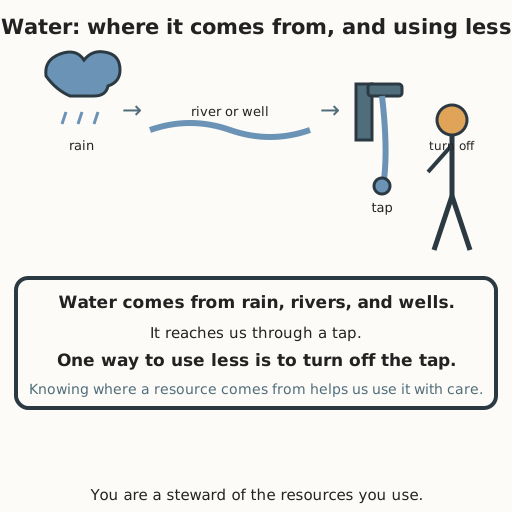
- Meet the three-part frame (10 min). Watch the worked example: water comes from rain, rivers, and wells; it reaches us through a tap; one way to use less is to turn off the tap when we are done. Say the frame: “___ comes from ___. One way to use less is ___.”
- Trace more resources (10 min). For each card, name the resource, where it comes from, and one way to use less: wood comes from trees — reuse it; electricity comes from power sources like sun, wind, water, or fuel — switch off the light.
- Choose and draw (15 min). Choose one resource you use every day. Draw where it comes from and one way to use less of it. Write or say the frame: “___ comes from ___. One way to use less is ___.”
- Share (5 min). Tell a partner your three-part answer — the resource, where it comes from, and how to use less. Listen to theirs.
- Close (5 min). Knowing where a resource comes from is the first step to caring for it. You are not just a user of resources — you are their steward.
Differentiation
- Support: Use the frame “___ comes from ___. One way to use less is ___,” completing it together aloud for one resource.
- Blind/low vision: Feel a cup of water or a leaf, and say where it comes from and one way to use less; a partner scribes the drawing.
- Deaf/hard of hearing / non-speaking: Point to the source and to the “use less” action on the cards; the learner’s own drawing may use pictures instead of words.
- Motor differences: Direct a partner’s hands to draw while the learner says or points to the resource, its source, and the “use less” action.
- Extension: Name a second resource and a second way to use less, or explain why using less of what runs out matters most.
Assessment
- Formative (observation): Can the learner name one resource people use every day, where it comes from, and one way to use less of it?
- Artifact (portfolio): The “resource, where it comes from, use less” drawing with the completed frame.
Home connection
At home, choose one resource your family uses — water, wood, or electricity — and ask a grown-up where it comes from. Together, name one way your family can use a little less of it this week, and try it.
Resources
- WHO, “Drinking-water fact sheet” — where drinking water comes from and why it matters, supporting the lesson’s tracing of water from rain, rivers, and wells to the tap. https://www.who.int/news-room/fact-sheets/detail/drinking-water