Lesson 02 — The Story of My Life So Far
Learners tell the story of their own life so far, in order — first, next, then — and mark the important people and places that belong in it. Each learner makes a "my life path" page, a personal timeline that becomes part of the year-end portfolio and celebrates a coherent, growing self.
Objectives
Objectives
- D01.S2.03.01 Tell a simple story of their own life so far, in order, including important people and places.
Essential question
How do I tell the story of my life so far, in order, with the important people and places in it?
Key vocabulary
Materials
Standard materials
- A "my life path" page · 1 per learner A winding path with stops to mark events, people, and places in order
- Crayons, pencils, and family photos or drawings (optional) · per learner
Low-tech / no-cost
- Voice and memory Tell the story of your life so far aloud, in order, to a partner — no page or photos needed
- Found objects Place stones or leaves along a drawn path in the dirt to stand for events, people, and places
Enriched / lab & device
- A portfolio folder or binder · 1 per learner To keep the life-path page for the year-end celebration
- Camera or tablet · 1 per group Record a learner telling their life story in order, then watch it back
Works in different contexts
- large-group Model one life story in order on the board first, then learners make their own paths in small groups
- self-directed A learner makes their own life path alone, in order, and shares it with a trusted person
- outdoor-only Walk a real path while telling the story — stop at a stone for each event, person, or place, in order
- multi-age Older learners tell their own longer story as a model, then help younger learners sequence theirs
- level-grouped Learners ready to extend add *why* each person or place matters to the story of who they are
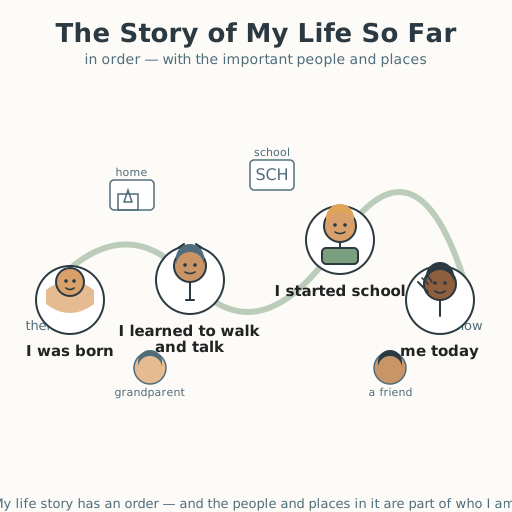
Lesson 2 — The Story of My Life So Far
Summary
Learners become storytellers of their own life. They sequence their life so far in order — first, next, then, now — and mark the important people and places that belong in the story. Each learner makes a “my life path” page, a personal timeline that shows one coherent, growing self and joins the year-end portfolio.
Objectives
- Tell a simple story of their own life so far, in order, including important people and places. (D01.S2.03.01)
Connection
Every person’s life is a story with an order: you were a baby, then you learned to walk and talk, then you started school, and now you are here. All over the world, people tell their life stories to remember who they are and where they come from — around a fire, in a family album, in a song, or in a letter. The important people and places in your story — the home you grew in, the person who cared for you, the friend who played with you — are part of what made you you. Today you tell your story so far, in order.
Materials
- A “my life path” page
- Crayons and pencils
- Family photos or drawings (optional)
Preparation
- Prepare the “my life path” page with a winding path and four or five empty stops labeled “first,” “next,” “then,” and “now.”
- Gather crayons, pencils, and any photos or drawings learners may want to use.
- Arrange learners so they can share their stories in pairs.
Facilitator note
This lesson is written to the learner (“you”). It spirals up from Grade 2’s work on alike/different and strengths, now into a coherent story of one whole life. Two commitments carry it: every family and home shape is honored, and the story has no “right” length or shape. A learner’s important people may be parents, one parent, grandparents, extended kin, guardians, foster or group care, a neighbor, or a trusted adult — all belong in a life story. A learner who was adopted, or who has moved homes, or who has lost someone, may need the story held gently: invite, never demand, and let them choose what to include. Honor a learner’s own home-word for a person (abuela, bà, bibi, auntie) and their own place-names. For a learner who is blind or has low vision, tell the story by voice and touch — objects in order — rather than pictures. For a learner who does not use a speaking voice, accept drawing, pointing, signing, or a partner voicing the story. The point is a story that is theirs, in order, told in their own way.
Procedure
- Gather (5 min). Close your eyes — or lower your gaze, or just look down and think quietly — and think back. What is the very first thing you can remember? Who was there? Where were you? That is the beginning of your story.
- Put it in order (10 min). A story goes in order: first, next, then, now. On your path, mark four or five stops: I was born; I learned to walk and talk; I started school; and anything else big that happened in between — a move, a new sibling, a first trip. Put them in the order they happened.
- Add the important people (10 min). At each stop, add the people who were there — the person who cared for you, the grandparent, the friend, the teacher. They are part of your story.
- Add the important places (10 min). Now add the places: the home, the school, the market, the field, the sea or mountain you know. Draw or write each one beside its stop.
- Tell your story (10 min). Tell your life story so far to a partner, in order, using your path. Then listen to your partner’s story. Notice how each story is different — and each one is worth telling.
- Close (5 min). Your life so far is a real story, with a beginning, a middle, and a now — and it is still being written. You are the author.
Differentiation
- Support: Offer a three-stop path and picture choices; scribe the words a learner says.
- Support (non-speaking): Point to pictures or objects in order; a partner voices the story.
- Support (blind/low-vision): Build the path tactually — objects in a row, in order — and tell it by voice.
- Support (motor differences): Paste pre-made pieces or dictate while a partner places them.
- Extension: Add why one person and one place matter to who you are now.
Assessment
- Formative (portfolio + peer + observation): Can the learner sequence three or more life events in order, and name at least one important person and one important place in their story?
Home connection
Tell someone at home the story of your life so far, in order, and ask them to tell you one part you did not know — then add it to your path.
Resources
- CASEL SEL Framework (self-awareness): https://casel.org/fundamentals-of-sel/