Lesson 02 — Looking with Respect — Art as Living Heritage
Learners practice looking at another culture's art as a living heritage, not a museum piece. They identify the subject, materials, and likely purpose of an artwork, then name one respectful question — a question that honors the people who make it today.
Objectives
Objectives
- D07.S1.04.02 Identify the subject, materials, and likely purpose of an artwork from another culture and name one respectful question about it.
Essential question
How do I look at another culture's art with respect and curiosity?
Key vocabulary
Materials
Standard materials
- Images or examples of artworks from more than one culture · 1 set Real, respectful images of living arts — e.g., an Akan adinkra cloth, Māori kōwhaiwhai rafter patterns, an Andean woven textile
- Look-closely frame (printed or drawn) · per learner Boxes for subject, materials, purpose, and one respectful question
Low-tech / no-cost
- Hand-drawn examples and frame Draw or describe artworks together and fill the frame on scrap paper
- A real object from the community If a local craftsperson can share a woven cloth, basket, or carving, look at it directly
Enriched / lab & device
- Tablet or projector with community-made videos · 1 Videos made by the artists or communities themselves, shared with permission
- A visiting artist or community member (if invited respectfully) · 1 Learn from a living tradition-bearer whenever possible
Works in different contexts
- large-group Show one artwork at a time to the whole group; fill the frame together aloud, then in pairs
- multi-age Older learners write complete sentences; younger learners point and say one word for each box
- self-directed A learner studies one image, fills all four boxes, and shares their respectful question with someone
- outdoor-only Use a real local craft object or a printed image held up outdoors; fill the frame by talking it through
Lesson 2 — Looking with Respect: Art as Living Heritage
Summary
Learners learn that another culture’s art is not a “thing from long ago” but a living heritage made by real people today. Using a look-closely frame, they identify an artwork’s subject (what it shows), materials (what it is made of), and likely purpose (what it is for), then name one respectful question — a question that honors the makers instead of judging them.
Objectives
- Identify the subject, materials, and likely purpose of an artwork from another culture and name one respectful question about it. (D07.S1.04.02)
Connection
When you meet a new person, you do not poke them or say “you look strange” — you say “tell me about yourself.” Art from another culture deserves the same welcome. A woven cloth, a painted rafter, a carved figure is still being made and used by living people who love it. Looking with respect means asking what it shows, what it is made of, what it is for — and then wondering, not judging. In any part of the world, the best way to meet an artwork is the best way to meet a person: with curiosity and care.
Materials
- Images or examples of artworks from more than one culture
- Look-closely frame (printed or drawn) with boxes for subject, materials, purpose, and one respectful question
Preparation
- Choose a few respectful, real images of living arts — for example, an Akan adinkra cloth (stamped cloth from Ghana), Māori kōwhaiwhai rafter patterns (Aotearoa New Zealand), and an Andean woven textile (Peru/Bolivia). Prefer images shared by the communities or cultural institutions, and honor any that are private or sacred by not using them at all.
- Copy a look-closely frame for each learner.
Facilitator note
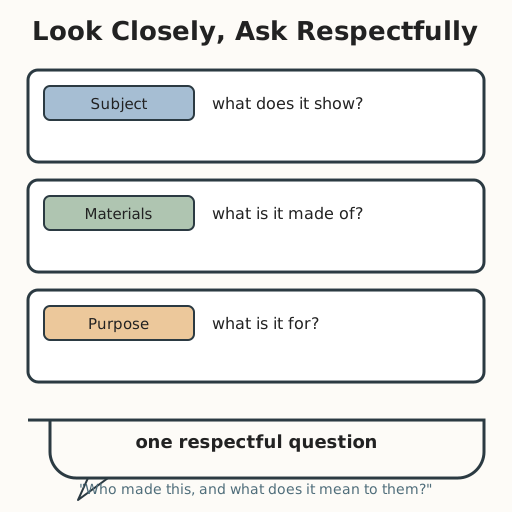
This lesson is written to the learner (“you”). The heart of it is a stance: other people’s arts are living heritage, never curiosities. Model the respectful-question skill with a worked example — a respectful question asks to understand (“Who makes this, and what does it mean to them?”), while a judgment is different (“Why do they make it look like that?”). Hold that distinction gently and often. If you can, invite a living tradition-bearer from the local community; if you cannot, say plainly that images are only a doorway and the best learning comes from the people themselves. Some arts are sacred or private, and the most respectful act is sometimes not to look — teach that boundary as part of respect. Distinguish what we can observe (subject, materials, purpose) from what we must ask about (meaning, occasion, belief).
Procedure
- Gather (5 min). Last time you learned how artists show depth. Today you learn how to look at art from another culture with respect. Other people’s arts are living heritage — made and used by real people today, not just long ago.
- Meet the look-closely frame (10 min). Look at the frame graphic. It has four
parts:
- Subject: what does it show?
- Materials: what is it made of?
- Purpose: what is it for?
- One respectful question: something you genuinely want to understand.
- Look at a real artwork (15 min). With the group or on your own, study one artwork — an adinkra cloth, a kōwhaiwhai pattern, or a woven textile. Fill the first three boxes from what you can see. Then write your one respectful question. Here is the difference: “What do the symbols mean?” is a respectful question; “Why does it look like that?” can sound like a judgment. Choose the kind that honors the makers.
- Share questions (10 min). Read your respectful question to a partner. Listen to theirs. Which questions would a living artist be glad to answer?
- Close (5 min). Remember: an artwork is a doorway to people. Ask to understand, not to judge — and know that some things are private, and respecting that is respect too.
Differentiation
- Support: Provide word cards (subject, materials, purpose) and sentence starters (“I notice…”, “I wonder…”) to fill the frame.
- Extension: Compare two artworks from two cultures and write a respectful question for each, noticing what you would ask the makers.
- Support (non-speaking): Point to subject, materials, and purpose, and show a “wonder” card for the respectful question.
Assessment
- Formative (observation): Can the learner name a subject, material, and purpose, and offer a question that seeks to understand rather than judge?
- Artifact (portfolio): The completed look-closely frame with the learner’s respectful question.
Home connection
At home, find one object or artwork that comes from a culture different from yours and ask, with a grown-up: what does it show, what is it made of, and what is it for? Then write one respectful question about it.
Resources
- Smithsonian National Museum of African Art: https://africa.si.edu/
- Te Papa Tongarewa (Museum of New Zealand) — Māori arts: https://www.tepapa.govt.nz/
- The Metropolitan Museum of Art, Heilbrunn Timeline of Art History: https://www.metmuseum.org/toah/