Lesson 05 — Safe at Home and Around Fire
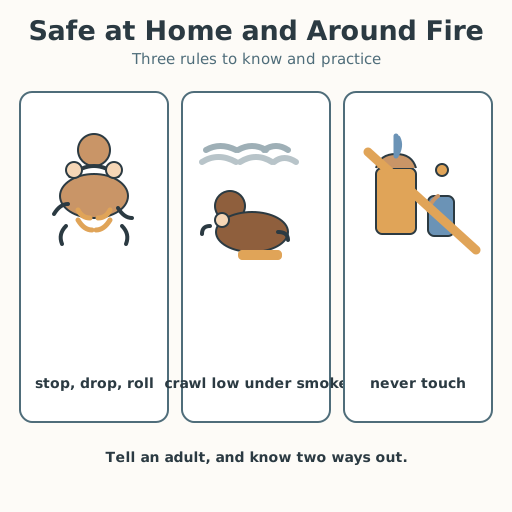
Learners open the safety strand by naming and practicing basic home and fire safety rules: never touch matches or lighters, tell an adult about smoke or fire, stop-drop-roll if clothing catches fire, crawl low under smoke, and know two ways out. The tone is calm and empowering, never frightening.
Objectives
Objectives
- D03.S4.04.01 Name and practice basic safety rules for home, road, water, and weather, such as fire, crossing, swimming, and storms.
Essential question
What basic safety rules keep me safe at home and around fire?
Key vocabulary
Materials
Standard materials
- Home and fire safety rule cards · 1 set Rules — never touch matches or lighters; tell an adult about smoke or fire; stop, drop, and roll; know two ways out; keep floors clear; never put water on a cooking-oil fire
- A "my safety rules" chart · 1 Columns to record home safety and fire safety rules across the next lessons
- Paper and crayons · per learner To draw one fire-safety rule and practice the motion
Low-tech / no-cost
- Voice and body Practice "stop, drop, and roll" and crawling low under "smoke" (a raised cloth or imagined); no cards needed
- A drawn floor plan Draw the room's shape in the dirt or on paper and trace two ways out with a finger or stick
Enriched / lab & device
- A working smoke-alarm sound to hear · 1 Play or describe the beep so learners recognize it; check with the building first
- A class fire-safety visit or chart · 1 A local firefighter visit or a wall chart of fire-safety steps
Works in different contexts
- large-group Demonstrate each rule at the front, have the whole group practice the motions, then record rules on the chart as a class
- self-directed A learner reads or hears each rule, practices the motions, and draws one rule with its action
- outdoor-only Practice "stop, drop, and roll" and crawling low on open ground; draw a two-ways-out plan with sticks
- multi-age Older learners model the motions while younger learners copy; everyone traces two ways out of the room
- level-grouped Learners who can retell the rules teach them back; others match each rule card to its action with support
Lesson 5 — Safe at Home and Around Fire
Summary
Learners open the safety strand by naming and practicing basic home and fire safety rules: never touch matches or lighters, tell an adult about smoke or fire, stop, drop, and roll if clothing catches fire, crawl low under smoke, and know two ways out. The tone is calm and empowering, never frightening.
Objectives
- Name and practice basic safety rules for home and fire. (D03.S4.04.01)
Connection
Home is where you should feel safest — and a few simple rules help keep it that way. Most home dangers are easy to prevent: a clear floor, matches kept away from children, a smoke alarm that warns everyone early. Knowing what to do means you can act calmly instead of freezing if something does happen. Today you will learn and practice the rules.
Materials
- Home and fire safety rule cards
- A “my safety rules” chart
- Paper and crayons
Preparation
- Prepare the rule cards and the “my safety rules” chart (this chart will grow across the next safety lessons).
- Prepare to demonstrate “stop, drop, and roll” and crawling low under smoke.
- Read the facilitator note fully; keep the tone calm and reassuring.
Facilitator note
This lesson is written to the learner (“you”). Empower, never frighten. Teach the rules plainly and practice them so they become automatic: never touch matches, lighters, or a cooking flame without an adult; if you see smoke or fire, tell an adult and get out; if your clothes catch fire, stop, drop, and roll (stop moving, drop to the ground, cover your face, roll back and forth); if there is smoke, crawl low under it; and know two ways out of every room. Stress that these are grown-up jobs first — a child’s job is to get out and get help, not to fight a fire. Adapt every motion for every body: a learner who uses a wheelchair practices the “two ways out” plan and how to alert an adult; a learner with limited movement learns to “drop and cover, then call” in a way that works for them. A learner who is deaf or hard of hearing must know a smoke alarm signal they can feel or see (a flashing strobe alarm or a trusted person); a learner who is blind or has low vision practices the route hand-over-hand and says the rules aloud. Practice the motions in the open, never near a real flame. The fire-safety steps follow widely taught guidance (stop-drop-roll, crawl low under smoke, know two ways out), as recommended by fire-safety and Red Cross organizations. This lesson opens D03.S4.04.01 and leads into road and water safety.
Procedure
- Gather (5 min). A safety rule is a simple “what to do” that keeps you from getting hurt. Today you will learn the rules for home and fire.
- Home rules (10 min). Keep floors clear so no one trips. Never touch matches, lighters, or a cooking flame without an adult. If you see smoke or fire, tell an adult right away. Point to each rule card as we name it.
- Stop, drop, and roll (10 min). If your clothes ever catch fire, stop moving, drop to the ground and cover your face, and roll back and forth until the fire is out. Practice the three motions in the open, in order.
- Crawl low and get out (10 min). In a fire, smoke rises, so the clean air is near the floor. Practice crawling low under the “smoke” (a raised cloth or imagined smoke). Then learn two ways out of this room — a door and a window or second door. Trace both ways.
- Grown-ups help (5 min). Remember: firefighting is a grown-up’s job. Your job is to stay safe, get out, and get help. A child never has to fight a fire alone.
- Close (5 min). Say it together: “At home I stay safe: no matches, tell an adult, stop-drop-roll, crawl low, and know two ways out.”
Differentiation
- Support: Practice one rule at a time and model each motion; accept spoken, drawn, or gestured answers.
- Support (non-speaking): Order the rule cards and show each motion with the body.
- Support (blind/low-vision): Say the rules aloud in order and practice the motions hand-over-hand with a guide.
- Extension: Draw a floor plan of one room at home with two ways out, and name the smoke-alarm sound your family should listen for.
Assessment
- Formative (observation): Can the learner name and act out the home and fire safety rules, with “tell an adult” and “two ways out” included?
- Self: The learner names the rule they practiced best and the first thing to do if they see smoke or fire.
Home connection
With a grown-up, find two ways out of one room in your home and check whether your home has a smoke alarm. Practice “stop, drop, and roll” together — without any real fire.
Resources
- International Federation of Red Cross and Red Crescent Societies, “Community health and first aid” (everyday safety skills): https://www.ifrc.org/our-work/health-and-care/community-health
- World Health Organization, “Burns” (prevention of fire and burn injuries): https://www.who.int/news-room/fact-sheets/detail/burns