Lesson 07 — Things We Share
Learners discover what all people share — needs, feelings, growth — and see that sharing connects them to everyone, even people far away.
Objectives
Objectives
- D01.S2.K.01 Share one thing that makes them unique and one thing they share with others.
Essential question
What do I share with other people?
Key vocabulary
Materials
Standard materials
- Paper and crayons · per learner
- A long strip of paper or string · 1 To make a shared "we all" chain or line
Low-tech / no-cost
- Voice and body Call out things everyone does (eat, sleep, laugh); learners step forward when it is true for them
- A shared ground drawing Draw one big circle in the soil and put a mark for each thing everyone shares
Enriched / lab & device
- A photo of the class or group · 1 Learners point to everyone and name things they all share
- A tablet with a simple chart app · 1 per group Make a "we all" list of shared needs and feelings
Works in different contexts
- large-group Play "step in if it is true for you" — every learner steps in for things everyone shares, like needing food and sleep
- self-directed A learner draws two circles that overlap — one for "me," one for "everyone" — and writes shared things where they meet
- outdoor-only Gather a natural object that everyone around you also needs or uses — water, shade, air — and talk about sharing it
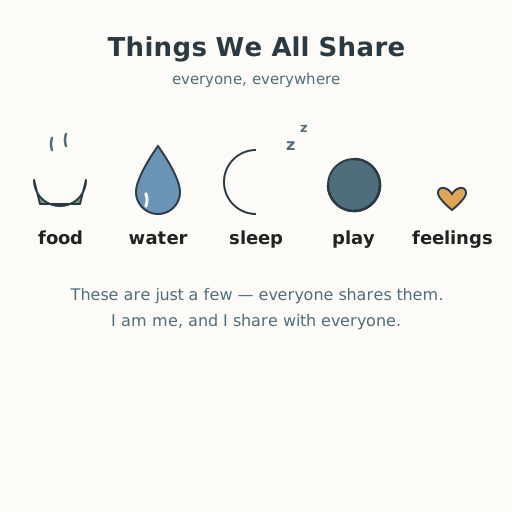
Lesson 7 — Things We Share
Summary
Learners move from “what makes me unique” to “what we all share.” They name the needs, feelings, and experiences every person has in common — and see that sharing connects them to everyone, near and far.
Objectives
- Share one thing that makes them unique and one thing they share with others. (D01.S2.K.01)
Connection
No matter where people live — in a busy city, a village, by the sea, or in the mountains — everyone eats, sleeps, laughs, and cries. Everyone has feelings and needs care. The things we share are like a bridge from me to you, and to people everywhere.
Materials
- Paper and crayons
- A long strip of paper or a length of string
Preparation
- Clear space for a “step in” circle.
- Prepare a list of shared things: eat, sleep, grow, laugh, cry, need water, need care, have feelings.
Facilitator note
This lesson is written to the learner (“you”) so it works in a classroom and for a self-directed learner. As facilitator, keep the shared list universal — needs and feelings every human shares — so every learner can step in and belong. This lesson pairs with Lesson 6: uniqueness and sharedness are two halves of one truth.
Procedure
- Gather (5 min). Stand in a circle. Think: what do you and your best friend both do every day?
- Step in (15 min). I will call out something. If it is true for you, step forward. “You eat food.” “You sleep.” “You laugh.” “You cry.” “You grow.” “You have feelings.” “You need people who care for you.” Step in each time — look around: everyone stepped in!
- A bridge of sharing (10 min). On the long paper, draw one thing everyone shares — a plate of food, a bed, a smiling face. Link your drawing to a partner’s.
- Near and far (5 min). Close your eyes and think of a child far away, in a place you have never seen. They eat and sleep and laugh too — just like you.
- Close (5 min). Remember: I am me, and I share with everyone. Both are true.
Differentiation
- Support: Call out one shared thing at a time and let learners nod or point instead of stepping.
- Extension: Invite learners to name a shared thing not on the list and explain why everyone needs it.
Assessment
- Formative (observation): Can the learner name one thing they share with all people?
- Artifact (portfolio): The shared “bridge” drawing.
Resources
- CASEL SEL Framework (foundational competencies): https://casel.org/fundamentals-of-sel/
Home connection
At home, with your family, make a list of three things everyone in your home shares, and three things that are different for each person.