Lesson 07 — A Place I Have Been
Learners talk about and draw a place they have been — near or far, big or small — using their senses to describe it.
Objectives
Objectives
- D08.S3.K.01 Talk about a place they have been or a family story of moving, and draw or describe it.
Essential question
How do I describe a place I have been?
Key vocabulary
Materials
Standard materials
- Paper and crayons or paints · per learner For drawing a remembered place
Low-tech / no-cost
- Voice and body Describe the place aloud with senses; no paper needed
- Found outdoor materials Sticks, leaves, and stones to build a small map or model of the place on the ground
Enriched / lab & device
- Photo or map of a local place (optional) · 1 set Real images to spark remembering, if learners struggle to call one to mind
- Class "places" wall · 1 wall A growing display of every learner's place drawing with their spoken caption
Works in different contexts
- large-group Learners share in small circles so each voice is heard; collect one sentence from each for the class wall
- self-directed The learner draws their place alone, then describes it to a grown-up or peer using the sense words
- outdoor-only Describe a place you can see right now — the sky, a tree, a path — and then draw it with a stick in the dirt or with found objects
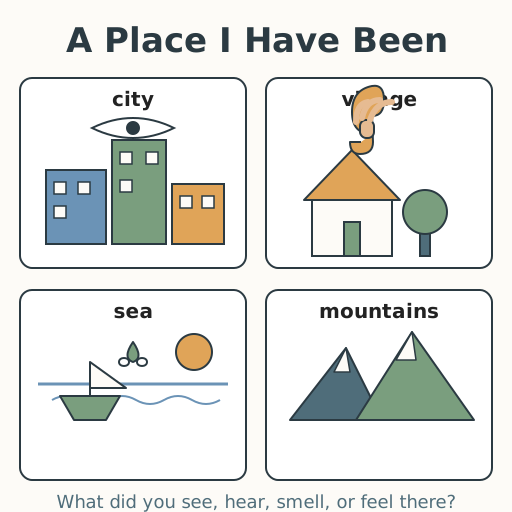
Lesson 7 — A Place I Have Been
Summary
Learners talk about and draw a place they know — near or far, big or small — and describe it with their senses. Every place a person has been is part of their story.
Objectives
- Talk about a place they have been or a family story of moving, and draw or describe it. (D08.S3.K.01)
Connection
You have been to places that are yours alone: a corner of your room, a market, a park, a grandparent’s home. Each place holds sights, sounds, and smells only you remember. Sharing a place is sharing a little piece of your own map of the world.
Materials
- Paper and crayons or paints
Preparation
- Set out drawing materials.
- Prepare a few sense-word prompts: What did you see? hear? smell? feel?
Facilitator note
Written to the learner (“you”) so it works in a classroom and for a self-directed learner. No travel is required. “A place” can be a room, a doorstep, a path, a tree — any place a child knows. Some children have moved often or have few places they call their own; let “here” and “now” count fully. Never rank places as more or less special. There is no “correct” place.
Procedure
- Gather (5 min). Close your eyes and think of a place you know well. It can be big or small, near or far.
- Describe it (10 min). Tell a partner or the group about it using your senses: what did you see, hear, smell, or feel there?
- Draw it (15 min). Draw your place. Add one detail that only you would know — a crack in the step, the color of the door.
- Share (10 min). Show your drawing and say one sentence about your place.
- Close (5 min). Every person has places that matter. No two people’s places are exactly alike, and each is worth hearing.
Differentiation
- Support: Draw the place together with a grown-up while describing it aloud.
- Extension: Add people to the drawing and tell who was there with you and what you did together.
Assessment
- Formative (observation): Can the learner describe a place using at least one sense word (saw, heard, smelled, felt)?
- Artifact (portfolio): The place drawing with its spoken caption.