Lesson 08 — Stories of Moving
Learners hear a gentle story of moving and wonder together about why people move and what it feels like, honoring every family's story without forcing disclosure.
Objectives
Objectives
- D08.S3.K.01 Talk about a place they have been or a family story of moving, and draw or describe it.
Essential question
Why do people move, and what is it like?
Key vocabulary
Materials
Standard materials
- A gentle story about moving · 1 A picture book or told story about a family or child moving, chosen with care
- Paper and crayons · per learner For drawing "my home" if a learner chooses to
Low-tech / no-cost
- A remembered family story The facilitator tells one gentle, true story of moving they know, or asks families to share one they are glad to tell
- Voice only No book needed; wondering and sharing aloud carries the lesson
Enriched / lab & device
- A set of moving picture books · 1 set Several stories of moving from different places and kinds of families, held side by side
- Class map · 1 A simple map where learners may (never must) mark a place their family came from
Works in different contexts
- large-group Use small circles for sharing so children who wish to speak are heard; sharing is always optional
- self-directed The learner reads or listens to the moving story alone, then draws or tells their own home story only if they want to
- outdoor-only Walk a short "journey" together — from one tree to another — and wonder what it is like to carry your home to a new place
Lesson 8 — Stories of Moving
Summary
Learners hear a gentle story about moving and wonder together about why people move and what it feels like. Every family’s story — of moving, staying, arriving, or adoption — is honored, and no child is asked to share more than they wish.
Objectives
- Talk about a place they have been or a family story of moving, and draw or describe it. (D08.S3.K.01)
Connection
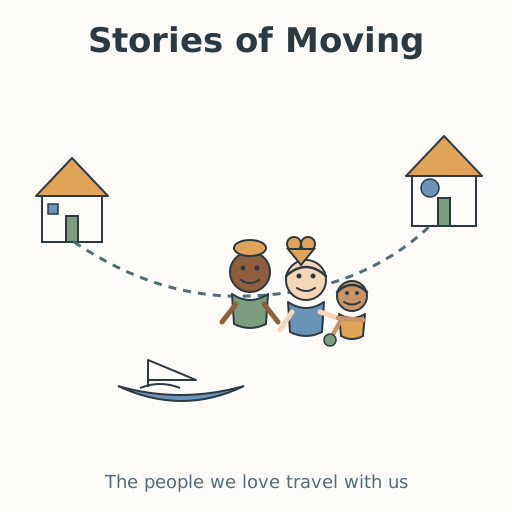
Some people live their whole life in one place; some move across the street, and some move across the world. Moving can feel exciting, hard, or both at once. The people we love and the things we remember travel with us wherever we go.
Materials
- A gentle story about moving (picture book or told story)
- Paper and crayons
Preparation
- Choose a gentle moving story that names real feelings (happy and hard) without blaming anyone.
- Prepare a calm circle and paper for optional drawing.
Facilitator note
Written to the learner (“you”) so it works in a classroom and for a self-directed learner. This is the most sensitive lesson in the unit. Some children have moved for hard reasons — displacement, loss, separation; some were adopted or fostered. Never require a child to tell a moving story, and never treat one kind of family story as more “correct” than another. Keep the wonder gentle and blame-free: people move for family, work, safety, or a new home — all are real, and none is a child’s fault.
Procedure
- Gather (5 min). Sit comfortably. Think quietly: has anyone you know ever moved, or have you? You do not have to say.
- Hear a story (15 min). Listen to the story of a child or family moving. Notice what they carried, who they missed, and what they found.
- Wonder together (10 min). Why do people move? (For family, work, safety, a new home.) What might feel happy? What might feel hard? Both can be true.
- Optional share or draw (10 min). If you want to, draw “my home” or tell one small thing. If you would rather listen, that is welcome too.
- Close (5 min). Every family has a story of coming and staying. Each one matters, and we listen without judging.
Differentiation
- Support: Focus only on the story’s character — “how did they feel?” — before any personal sharing.
- Extension: Invite families (with permission) to share a short moving story, and compare one happy and one hard part across stories.
Assessment
- Formative (observation): Does the learner engage with the story and name a reason people move or a feeling about moving?
- Formative (oral, optional): If a learner chooses to share, can they describe a place or a moving story in their own words?