Lesson 10 — First, Next, Last
Learners plan a short story in three ordered parts using the words first, next, and last, turning a happening into a story with a beginning, a middle, and an end.
Objectives
Objectives
- D04.S3.02.01 Write a short narrative of several sentences in order, using words such as first, next, and last.
Essential question
How do I plan a story in order with first, next, and last?
Key vocabulary
Materials
Standard materials
- A three-part story planner · 1 Three boxes labeled first, next, last for drawing or writing
- A short model story · 1 A three-part example to study before writing one's own
Low-tech / no-cost
- Three stones or leaves Lay out three objects to stand for the three parts of the story
- A story told aloud Tell a three-part story, touching first, next, last as you go
Enriched / lab & device
- Picture cards to order · 1 set A jumbled three-picture sequence the learner orders before writing
- A digital or paper book template · 1 A three-page blank book for first, next, and last
Works in different contexts
- large-group Plan a shared class story together, the whole group supplying each of the three parts while the facilitator records them
- self-directed A learner plans three boxes on their own, then tells the planned story aloud to a grown-up or a recording
- multi-age Older learners help younger ones order three picture cards first, then both write their own three-part plan
- level-grouped Groups at different levels plan with pictures, with sentence starters, or with full sentences, each using first, next, and last
- outdoor-only Plan a story while walking to three spots — first spot, next spot, last spot — one part of the plan at each stop
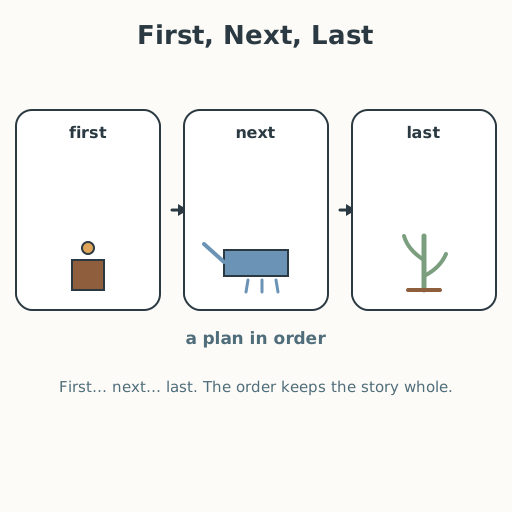
Lesson 10 — First, Next, Last
Summary
Learners plan a short story in three ordered parts using first, next, and last. Before writing, a story needs a plan — three boxes that hold the beginning, the middle, and the end.
Objectives
- Plan a short narrative in order, using words such as first, next, and last. (D04.S3.02.01)
Connection
Every recipe, every journey, and every day has an order: first you wake, next you eat, last you sleep. A story is the same — if its parts come out of order, it falls apart, like telling the ending before the beginning. Planning with first, next, and last is how cooks, builders, and storytellers everywhere keep a thing whole.
Materials
- A three-part story planner (first, next, last)
- A short model story to study
Preparation
- Prepare the three-box planner.
- Choose or tell a short three-part model story to study together.
Facilitator note
This lesson is written to the learner (“you”) so it works in a classroom and for a self-directed learner. This is the planning lesson; writing comes next, so keep today’s product a plan — three ordered parts, drawn or written. Use a worked example first: study the model story’s three parts together, then let learners plan their own (Kirschner, Sweller & Clark, 2006). The order words differ across languages; learners use their home language’s words for first, next, and last. Plans may be pictures, spoken sentences, signed sequences, or written words — the order is the point. No story is too small: how to wash a hand, feed a goat, or walk to the well is a fine story.
Procedure
- Gather (5 min). Think of something you do every day in three steps. What do you do first? next? last?
- Study a model (10 min). Listen to or read a short model story. Notice its three parts: what happened first, next, and last.
- Meet the planner (5 min). Look at your three boxes. Box one is first, box two is next, box three is last. A good story lives in all three.
- Plan your story (15 min). Choose a small happening from your own life — real or imagined. In box one, draw or write what happens first; in box two, next; in box three, last. Say the three parts aloud using the order words.
- Tell your plan (5 min). Tell your three-part plan to a partner in order. Listen as they tell theirs.
- Close (5 min). A story with first, next, and last is a story that holds together. Tomorrow, we turn this plan into writing.
Differentiation
- Support: Plan with two boxes first (first, last), then add the middle; use pictures instead of words.
- Support (non-speaking): Plan by laying three pictures or objects in order and signing or pointing to each part — the order is the plan.
- Extension: Plan a four-part story and decide which of the four parts is the most important, and why.
Assessment
- Formative (observation): Can the learner plan a story in three ordered parts and tell it using first, next, and last?
Home connection
Plan tonight in three parts — first, next, last — how you will help with one small task at home, and tell someone your plan.
Resources
- Kirschner, Sweller & Clark (2006), “Why Minimal Guidance During Instruction Does Not Work” — worked examples for new writing skills.