Lesson 06 — Why We Brush and Rest
Learners explain why brushing teeth and getting enough rest help keep the body well: brushing washes away food and plaque that can hurt teeth, and sleep helps the body grow, heal, and fight sickness. Every body's rest and every way of cleaning teeth is honored.
Objectives
Objectives
- D03.S4.02.01 Explain why handwashing, tooth-brushing, and rest help prevent sickness and keep the body well.
Essential question
Why do brushing my teeth and getting enough rest help keep my body from getting sick?
Key vocabulary
Materials
Standard materials
- A toothbrush and toothpaste · per learner Each learner's own brush (or a demonstration brush); never share brushes
- A cup of water · per learner For rinsing
- A "rest and sleep" chart · 1 Pictures of rest — sleeping, quiet time, a dim room, a bedtime routine
Low-tech / no-cost
- A clean finger and water Where there is no brush, cleaning teeth with a clean finger and water, or a chewing stick, also helps — teach what is available
- Voice and body Practice the brushing motion with a finger and act out a bedtime routine; no brush needed to learn
Enriched / lab & device
- A tooth model with large teeth · 1 Practice the brushing motion on a big model before doing it on real teeth
- A picture book about sleep · 1 A gentle story about how rest helps a body grow and heal
Works in different contexts
- large-group Demonstrate the brushing "why" on a big model, then practice the motion together and build one class bedtime-routine chart
- self-directed A learner brushes following the steps, explains why, and draws one rest habit that helps their body
- outdoor-only Practice the brushing motion with a finger or a clean twig, and talk about rest under the sky and the rhythm of day and night
- multi-age Older learners demonstrate and help younger ones reach back teeth and explain the reason for brushing and sleeping
- level-grouped Learners who can explain the reasons teach them aloud; others practice the motion and repeat the reasons with support
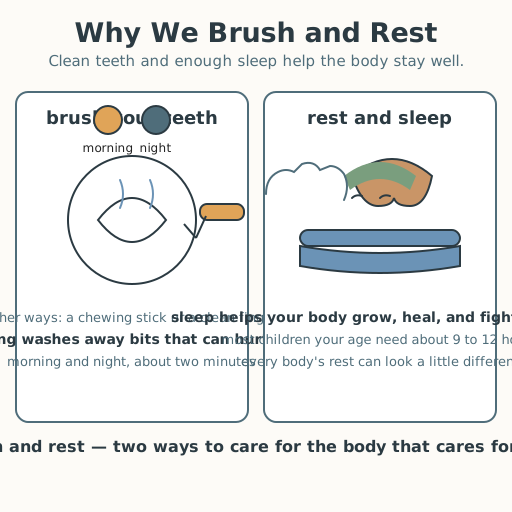
Lesson 6 — Why We Brush and Rest
Summary
Learners already know how to brush their teeth from Grade 1; now they learn why brushing and rest keep the body well. Brushing washes away food and plaque that can hurt teeth, and sleep helps the body grow, heal, and fight sickness. People clean teeth in many ways, and every body’s rest can look a little different — all are honored.
Objectives
- Explain why handwashing, tooth-brushing, and rest help prevent sickness and keep the body well. (D03.S4.02.01)
Connection
You brush your teeth morning and night, and you rest when your body is tired. But do you know why? Brushing washes away sticky bits that can make teeth hurt, and sleep is when your body grows, heals, and gets ready to fight sickness. Today you will learn the reasons behind two habits you already practice.
Materials
- A toothbrush and toothpaste (each learner’s own, or a demonstration brush)
- A cup of water for rinsing
- A “rest and sleep” chart
Preparation
- Ensure each learner has their own clean toothbrush (never share brushes).
- Set up a place to practice, with water and a place to spit safely.
- Prepare a “rest and sleep” chart (sleeping, quiet time, a dim room, a bedtime routine).
Facilitator note
This lesson is written to the learner (“you”). Grade 1 taught the how; Grade 2 adds the why for both brushing and rest. Teach each reason as a worked example, then let learners say it back in their own words. Honor every context: where brushes or paste are unavailable, teach a clean-finger or chewing-stick method without shame. Where a learner cannot brush their own teeth, a caregiver or older peer can help — the goal is clean teeth, not doing it alone. Honor every body’s rest: most children this age need about 9 to 12 hours of sleep (per the American Academy of Sleep Medicine), but families rest in different ways and at different rhythms — no family is shamed for how or how much they rest. Some learners cannot sleep in a bed of their own; hold this gently and without comment. Care is never a test. A learner who does not use a speaking voice points or signs; a learner who is blind or has low vision is guided hand-over-hand and explains aloud. A learner who is deaf or hard of hearing follows the demonstration and picture charts from the front, since each step is shown, not only told. The health facts are from the World Health Organization (brushing removes food and plaque that can hurt teeth and gums) and the American Academy of Sleep Medicine (children 6–12 need about 9–12 hours of sleep). This lesson completes the D03.S4.02.01 “why” trio.
Procedure
- Gather (5 min). Smile at a friend. Your teeth help you eat, talk, and smile — and your whole body needs rest. Today we learn why brushing and sleeping keep you well.
- Why does brushing work? (10 min). Sticky bits of food stay on teeth and turn into plaque, which can hurt teeth and gums. Brushing with a small dab of paste washes the plaque away. Practice the motion with your finger: tops, fronts, backs, and tongue side — every surface.
- Brush for real (10 min). Brush your own teeth for about two minutes, singing a short song in your head. Rinse, then run your tongue over your teeth: do they feel smooth and clean?
- Why does rest help? (10 min). While you sleep, your body grows, heals little hurts, and gets strong to fight sickness. That is why being tired is your body asking for rest. Look at the rest chart: a dim room, a calm routine, a quiet body. Most children your age need about 9 to 12 hours of sleep — but every body’s rest can look a little different, and that is okay.
- Connect it (5 min). Tell a partner one reason we brush and one reason we rest, in your own words.
- Close (5 min). Brush and rest — two ways to care for the body that cares for you.
Differentiation
- Support: Practice the brushing motion with a finger first; model the “why” and have the learner echo it.
- Support (deaf/hard-of-hearing): Face the learner for every step and pair each motion and reason with its picture card.
- Support (motor-difference): A caregiver or peer helps reach back teeth while the learner leads and explains as much as they can.
- Extension: Draw or tell a bedtime routine that helps a body rest, and explain why each part helps.
Assessment
- Formative (observation): Can the learner explain why brushing and rest help prevent sickness and keep the body well, in their own way?
- Self: The learner names one reason to brush and one reason to rest.
Home connection
Before bed tonight, brush your teeth and tell a grown-up why brushing and sleeping help your body stay well.
Resources
- World Health Organization, “Oral health” (caring for teeth and mouth): https://www.who.int/news-room/fact-sheets/detail/oral-health
- American Academy of Sleep Medicine, “Recommended Amount of Sleep for Pediatric Populations” (sleep needs for children): https://aasm.org/resources/pdf/pediatricsleepdurationconsensus.pdf