Lesson 02 — Same Tool, Different Lives: Two Places
Learners compare how people in two different places use a similar technology differently and suggest why. A worked example follows the mobile phone: in one place, far from banks, it became a wallet for mobile money; in a busy city, it is mostly for calls, photos, and messages. Learners then compare the bicycle or the water pump across two places, discovering that a tool's use grows from the needs, land, and life of each place — not from one place being "ahead" of another.
Objectives
Objectives
- D10.S1.05.02 Compare how people in two different places in the world use a similar technology differently, and suggest why.
Essential question
How do people in two different places use a similar technology differently, and why?
Key vocabulary
Materials
Standard materials
- Two-places poster · 1 A poster comparing the mobile phone used as a wallet for mobile money (Place A, far from banks) and used for calls and photos (Place B, a city) — with a "why" line for each
- Two-places comparison cards · 1 set per pair Cards for the bicycle (a load-carrier and taxi in one place, a commuter ride in another) and the water pump (irrigation in one place, drinking water in another), each with two places and a "why" hint
- Compare page · 1 per learner A page with two columns (Place 1 | Place 2) and a "why the difference?" line
Low-tech / no-cost
- A told comparison and two columns in the dirt Tell one comparison aloud; learners place a stone under "place 1" or "place 2" and name the why; no paper needed
- Acted uses Mime the same tool two ways — pedaling a bicycle to work vs. balancing a load of goods — and name why each place uses it so
Enriched / lab & device
- A short photo pair of the same tool in two places · 1 set Photographs of a bicycle as a delivery vehicle and as a commuter ride, or of a phone used for mobile money and for messaging, to compare
- A device for a map or image search · 1 per group To find a second real example of one tool used differently in two places, where devices are available
Works in different contexts
- large-group Do the phone comparison together on the poster, then have pairs analyze a card and report "two places, two uses, one why" in one sentence
- multi-age Younger learners name the two uses; older learners suggest the "why" and check it against the hint on the card
- self-directed A learner reads the comparison cards, fills the compare page for one tool, and writes one sentence on why the uses differ
- level-grouped Learners ready to extend compare a tool they use at home with how a friend or relative elsewhere uses it, and suggest why
- outdoor-only If a bicycle, pump, or cart is available, show it two ways and talk about why different places would use it differently; no paper needed
Lesson 2 — Same Tool, Different Lives: Two Places
Summary
Learners compare how people in two different places use a similar technology differently, and suggest why. A worked example follows the mobile phone: in one place, far from banks, it became a wallet for mobile money; in a busy city, it is mostly for calls, photos, and messages. Learners then compare the bicycle or the water pump across two places, discovering that a tool’s use grows from the needs, land, and life of each place — not from one place being “ahead” of another.
Objectives
- Compare how people in two different places in the world use a similar technology differently, and suggest why. (D10.S1.05.02)
Connection
The same bicycle you ride to a friend’s house can, in another place, carry sacks of grain to market, a passenger to a clinic, or a stack of water jugs home. The same phone that plays your music is, elsewhere, a bank in someone’s pocket. A tool is not used the same way everywhere, because the life around it is different. Today you learn to compare two places and ask the one question that explains it: why?
Materials
- Two-places poster (the phone as wallet vs. the phone for calls and photos)
- Two-places comparison cards (the bicycle, the water pump)
- Compare page
- Pencils
Preparation
- Print or draw the two-places poster for the phone.
- Copy the comparison cards for each pair and a compare page for each learner.
Facilitator note
This lesson is written to the learner (“you”). The skill to land is the compare-and-why
move: name the two places, name the two uses, then suggest why they differ. Model the
phone example fully before learners compare the bicycle or water pump. Keep the global frame
egalitarian: the point is that uses differ and why, never that one place is “advanced”
and another “behind.” The mobile-money example is well documented (M-Pesa and similar services
grew where bank branches were scarce). Distinguish evidence from values: where and how a tool
is used is a fact we can investigate; that each use is a fitting, intelligent response to a
place’s needs is the value stance we hold. See docs/philosophy.md §4 and
docs/facilitation.md.
Procedure
- Gather (5 min). Recall from last lesson: a tool changes daily life. Today, a new idea — the same tool can change daily life differently in two places.
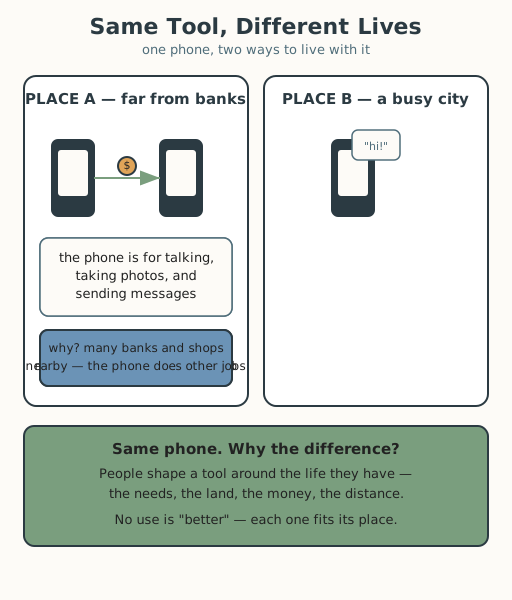
- Meet the phone in two places (12 min). Look at the poster. Place A, far from bank branches: people use the phone as a wallet — to send money, pay at a market, and save. Place B, a busy city with many banks: people use the phone mostly for calls, photos, and messages. Same phone, two lives. Why? In Place A there are few banks nearby, so the phone filled that need; in Place B there are many, so the phone does other jobs.
- Compare your own tool (18 min). Choose the bicycle or the water pump. Bicycle: in one place it is a load-carrier and taxi (boda-boda) moving people and goods on dirt roads; in another it is a daily commuter ride on flat, bike-friendly streets — why? terrain, distance, the cost of fuel, and what needs moving. Water pump: in one place it lifts water for drinking; in another it irrigates fields — why? what each place needs the water for. On your compare page, write or draw Place 1 and its use, Place 2 and its use, and one why.
- Check with a partner (10 min). Tell your comparison in one breath: “In ___, people use the ___ for ___; in ___, they use it for ___ — because ___.” Ask: does the “why” make sense, and does it respect both places equally?
- Close (5 min). No use is “better” — each fits its place. People shape tools around the life they have.
Differentiation
- Support: Provide a card with the two places and uses partly filled in, and a “why” sentence starter; work one comparison aloud first.
- Extension: Compare a tool your own family uses with how a friend or relative elsewhere uses it, and write a “why.”
Assessment
- Formative (observation): Can the learner name two places, two different uses, and one reason the uses differ?
- Peer check: Partners ask each other, “Did you name two places, two uses, and a why — without ranking either place as better?”
Home connection
Think of one tool your household uses. Ask someone at home how a relative or friend in another place uses that same tool differently, and why.
Resources
- Mobile money (for example, M-Pesa) grew in places with few bank branches, letting people
send, save, and pay by phone — documented by the Consultative Group to Assist the Poor
(CGAP) and the World Bank. The bicycle’s many uses — commuting in some places, carrying
loads and passengers in others — and the water pump’s double life as a drinking-water and
irrigation device are widely documented (for example, ITU and UN Water materials). The
egalitarian framing — no use ranked as “better” — follows
docs/philosophy.md§4.