Lesson 07 — All Connected: When One Part Changes
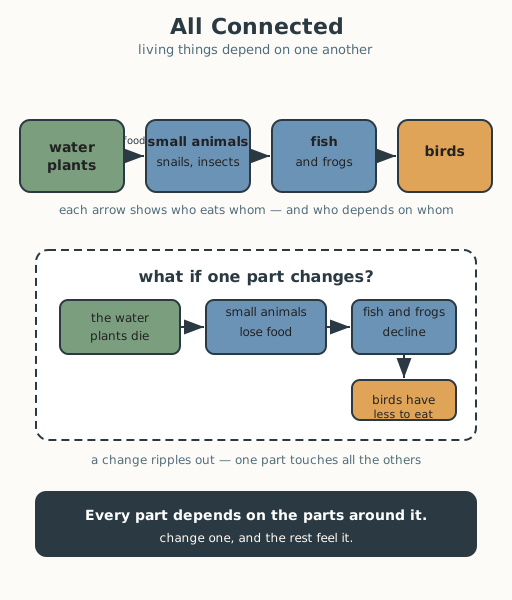
Learners explain how living things in an ecosystem depend on one another and what happens when one part changes. A worked example traces a pond chain — water plants → small animals → fish and frogs → birds — and the ripple when the plants die. Learners then trace a change through a coral reef, mangrove, savanna, or forest, learning that a change ripples outward: change one part, and the rest feel it — and care and restoration can ripple helpfully too.
Objectives
Objectives
- D10.S3.05.02 Explain how living things in an ecosystem depend on one another and what can happen when one part changes.
Essential question
How do living things in an ecosystem depend on one another, and what happens when one part changes?
Key vocabulary
Materials
Standard materials
- Ripple-chain poster · 1 A poster showing a pond chain — water plants → small animals → fish and frogs → birds — with a "what if one part changes" ripple to the right
- Ecosystem ripple cards · 1 set per pair Cards for a coral reef, a mangrove, a savanna, and a forest, each naming four linked living things and one "what if" change to trace
- Ripple page · 1 per learner A page with a chain of boxes and a "what if" box to trace one change through the web
Low-tech / no-cost
- A living ripple with string Learners stand as the pond's plants, snails, fish, and birds holding a string; one steps away and the others tug to feel the change; no paper needed
- A spoken ripple Name a chain aloud, then ask "what if one part changes?" and have learners call the next part in turn; voice only
Enriched / lab & device
- A short photo set of real ecosystems · 1 set Photographs of a coral reef, mangrove, savanna, and forest to ground the ripple cards in real places
- A device with a short ecosystem video · 1 per group To watch one real ecosystem and its links, where devices are available
Works in different contexts
- large-group Trace the pond ripple together on the poster, then have pairs trace a card and report "if ___ changes, then ___ , then ___" in one sentence
- multi-age Younger learners name who eats whom; older learners trace the full ripple and say what could help the ecosystem recover
- self-directed A learner works a ripple card alone, fills the ripple page, and writes one sentence on what happens when one part changes
- level-grouped Learners ready to extend trace a change that *helps* (a plant restored) as well as one that harms, and compare the two ripples
- outdoor-only Find a real chain nearby (a plant, an insect, a bird, a worm) and ask aloud what would happen if one part disappeared; no paper needed
Lesson 7 — All Connected: When One Part Changes
Summary
Learners explain how living things in an ecosystem depend on one another and what happens when one part changes. A worked example traces a pond chain — water plants → small animals → fish and frogs → birds — and the ripple when the plants die. Learners then trace a change through a coral reef, mangrove, savanna, or forest, learning that a change ripples outward: change one part, and the rest feel it — and care and restoration can ripple helpfully too.
Objectives
- Explain how living things in an ecosystem depend on one another and what can happen when one part changes. (D10.S3.05.02)
Connection
Pull one thread in a woven cloth and the whole cloth can pucker. An ecosystem is like that cloth. In a pond, the plants feed the snails, the snails and insects feed the fish, the fish feed the frogs and birds — each thread holds the next. When one thread is pulled hard enough, the rest feel it. Today you learn to trace that ripple, and to see that care can ripple the other way too.
Materials
- Ripple-chain poster
- Ecosystem ripple cards
- Ripple page
- Pencils
Preparation
- Print or draw the ripple-chain poster.
- Copy ecosystem ripple cards for each pair and a ripple page for each learner.
- If using the string activity, have one length of string or yarn ready.
Facilitator note
This lesson is written to the learner (“you”). The skill to land is the ripple trace: name
the chain of dependence, then follow one change through it (“if ___ changes, then ___, then
___”). Model the pond chain fully as a worked example. This builds on Grade 4 (producers,
consumers, decomposers) and on this unit’s food-web and cycle work. Keep it hopeful and
agency-focused: interdependence means harm can ripple, and so can care and restoration —
never teach a “doomed ecosystem” without also teaching what can help. Distinguish evidence
from values: how living things depend on one another is observable science; that we should
care for ecosystems is a value this curriculum holds. See docs/facilitation.md and
docs/philosophy.md §4–5.
Procedure
- Gather (5 min). Recall the food web you built earlier this year: energy flows from what is eaten to what eats it. Today, a bigger idea — what happens when one part of that web changes.
- Meet the pond ripple (12 min). Look at the poster. The water plants feed the small animals (snails, insects); the small animals feed the fish and frogs; the fish and frogs feed the birds. Now ask what if: if the water plants die, the small animals lose food, then the fish and frogs decline, then the birds have less to eat. One change — and the whole chain feels it. That is a ripple.
- Trace your own ripple (18 min). Choose an ecosystem card — a coral reef (if the coral bleaches, the fish that live in it decline, then the bigger fish and the fishers who depend on them feel it), a mangrove (if the mangroves are cut, young fish lose their nursery, then the larger fish and the birds decline, and the coast loses its storm shield), a savanna (if too many grazers are removed, the grass thickens, then fires and insects change, then other animals shift), or a forest (if the big trees fall, the shade and homes for many animals vanish, then the small animals and birds decline). On your ripple page, trace the chain and the change.
- Check with a partner (10 min). Say your ripple in one breath: “if ___ changes, then ___, then ___.” Then ask together: what could help it recover — what care would ripple the good way?
- Close (5 min). Living things hold each other up. Change one, and the rest feel it — and that means your care can ripple too.
Differentiation
- Support: Provide a ripple page with the first two boxes filled in, and a sentence starter; work one chain aloud first.
- Extension: Trace a change that helps (a plant restored, a predator returned) as well as one that harms, and compare how the two ripples differ.
Assessment
- Formative (observation): Can the learner name a chain of dependence and trace one change through it, stating at least two “then” steps?
- Peer check: Partners ask each other, “Did you trace the change all the way through — and did you name something that could help?”
Home connection
Pick a small ecosystem near home — a garden, a patch of grass, a pond, a tree. Name who depends on whom, and ask what would happen if one part changed.
Resources
- Interdependence in ecosystems and the ripple effects of changing one part are core ecology
content for this band (documented in children’s science references such as BBC Bitesize,
National Geographic Kids, and Britannica Kids). Coral bleaching, mangrove nurseries, and
forest habitats are described by NOAA, UNESCO, and the World Wildlife Fund in
age-appropriate terms. The stewardship-and-hope framing follows
docs/facilitation.mdanddocs/philosophy.md§12.