Lesson 08 — Pollution, and What People Can Do
Learners describe a form of pollution or habitat loss and name one thing people can do to reduce it. A worked example traces plastic from a dropped bag or bottle through a river to the ocean, where an animal mistakes it for food or gets tangled — then turns to what people can do: refuse, reuse, recycle, and join a clean-up. Learners then choose air pollution or habitat loss, trace its pathway, and name a real action, holding both truths at once: the problem is real, and so are the fixes.
Objectives
Objectives
- D10.S4.05.01 Describe a form of pollution or habitat loss and one thing people can do to reduce it.
Essential question
What is one form of pollution or habitat loss, and what is one thing people can do to reduce it?
Key vocabulary
Materials
Standard materials
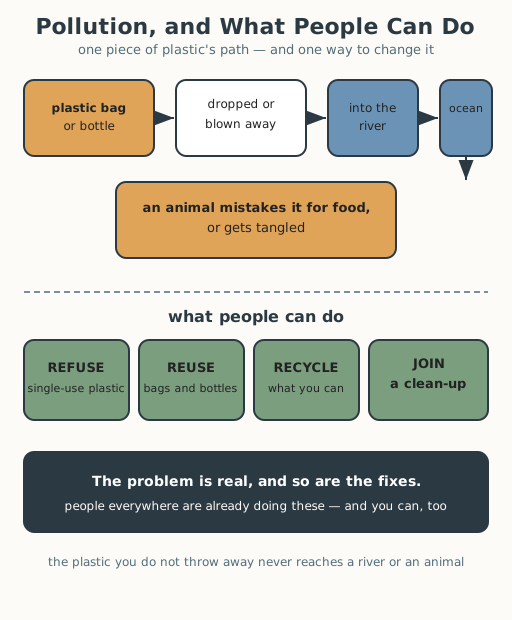
- Pollution-pathway poster · 1 A poster tracing plastic from a dropped bag or bottle through a river to the ocean, where an animal mistakes it for food or gets tangled — with a "what people can do" band beneath
- Pollution-and-action cards · 1 set per pair Cards for three problems — plastic in rivers and oceans, air pollution from burning trash or fuels, and habitat loss from clearing forests — each with one thing people can do
- Action page · 1 per learner A page to name one form of pollution or habitat loss and one real action people (including the learner) can take
Low-tech / no-cost
- A spoken pathway and action Tell the plastic's journey aloud, then learners name one action for each problem; voice only
- A pathway in the dirt Draw the bag → river → ocean → animal path and a "what people can do" branch with a stick; no paper needed
Enriched / lab & device
- A short photo or video set of real clean-ups · 1 set Images of a river clean-up, a recycling depot, or a reforestation project, to show that people are already acting
- A device to research one local action · 1 per group To find a real action near the learner's region, where devices are available
Works in different contexts
- large-group Trace the plastic pathway together on the poster, then have pairs work a card and report "the problem is ___, and people can ___" in one sentence
- multi-age Younger learners name the problem and one action; older learners explain *how* the action reduces the harm
- self-directed A learner works a card alone, fills the action page, and writes one form of pollution and one real action people can take
- level-grouped Learners ready to extend compare two actions for the same problem and explain which reduces more harm and why
- outdoor-only Find one piece of litter or one sign of habitat change outside, name its path, and decide one action; no paper needed
Lesson 8 — Pollution, and What People Can Do
Summary
Learners describe a form of pollution or habitat loss and name one thing people can do to reduce it. A worked example traces plastic from a dropped bag or bottle through a river to the ocean, where an animal mistakes it for food or gets tangled — then turns to what people can do: refuse, reuse, recycle, and join a clean-up. Learners then choose air pollution or habitat loss, trace its pathway, and name a real action, holding both truths at once: the problem is real, and so are the fixes.
Objectives
- Describe a form of pollution or habitat loss and one thing people can do to reduce it. (D10.S4.05.01)
Connection
You have probably seen a wrapper or bottle lying where it should not be — by a path, in a drain, near a river. That one piece has a journey: into the water, out toward the sea, and into the life of an animal that mistakes it for food. The good news is that the journey can be stopped before it starts — by people who refuse, reuse, recycle, and clean up. Today you learn to trace the problem and the fix.
Materials
- Pollution-pathway poster
- Pollution-and-action cards
- Action page
- Pencils
Preparation
- Print or draw the pollution-pathway poster.
- Copy pollution-and-action cards for each pair and an action page for each learner.
Facilitator note
This lesson is written to the learner (“you”). The skill to land is the pathway-and-action
move: name the form of pollution or habitat loss, trace its path to the harm, then name a
real action people can take. Model the plastic example fully as a worked example. Keep the
tone hopeful and agency-focused, never doom: always pair the problem with a real, doable
fix and with the fact that people everywhere are already acting (clean-ups, reforestation,
cleaner stoves, recycling). Distinguish evidence from values: what pollution does and how it
travels is observable science; that we should reduce harm to other beings and future people
is a value we hold. Avoid shaming any learner or region for waste they did not choose. See
docs/facilitation.md and docs/philosophy.md §12.
Procedure
- Gather (5 min). Recall from earlier grades: reduce, reuse, recycle. Today you add the why — what pollution and habitat loss actually do — and the what — one real thing people can do.
- Meet the plastic pathway (12 min). Look at the poster. A plastic bag or bottle is dropped or blown away → it washes into the river → it flows out to the ocean → an animal mistakes it for food or gets tangled. That is the harm. Now the fix — what people can do: refuse single-use plastic, reuse bags and bottles, recycle what you can, and join a clean-up. One action stops the journey before it starts.
- Practice with a partner (18 min). Take a card. Air pollution (from burning trash or fuels): the smoke harms lungs and skies; people can burn less, use cleaner stoves, and plant trees. Habitat loss (from clearing forests): animals lose their homes; people can plant native trees, use less paper, and protect reserves. On your action page, write or draw the problem, its pathway, and one real action.
- Check with a partner (8 min). Say it in one breath: “the problem is ___, because ___; one thing people can do is ___.” Ask: is the action real, and does it actually reduce the harm?
- Close (5 min). The problem is real — and so are the fixes. You are not just learning about harm; you are learning what to do about it.
Differentiation
- Support: Provide a card with the pathway partly filled in and a sentence starter for the action; work one problem aloud first.
- Extension: Compare two actions for the same problem and explain which reduces more harm, and how you can tell.
Assessment
- Formative (observation): Can the learner name a form of pollution or habitat loss, trace its pathway, and give one real action people can take to reduce it?
- Self-check: The learner asks, “Did I name both the problem and one real fix — and could I actually do the fix myself?”
Home connection
Notice one form of waste or habitat change near home. Name its pathway and one action your family could take — then try that action once this week.
Resources
- Plastic pollution’s path from land to rivers to oceans and its harm to wildlife is documented
by UNEP and the National Oceanic and Atmospheric Administration (NOAA) in age-appropriate
terms; air pollution from open burning and fuels and deforestation-driven habitat loss are
documented by the World Health Organization and the UN Food and Agriculture Organization
(FAO). The “refuse, reuse, recycle, clean up” actions are the standard reduce-waste ladder
(UNEP). The stewardship-and-hope framing follows
docs/facilitation.md.