Lesson 09 — Me in the Machine
Learners examine how technological forces — algorithms, curated feeds, and social comparison — quietly shape self-image, and how to keep authorship of identity inside that machinery. They name what the feed *shows* and what it *hides*, notice how comparison-based self-worth works (and why it is fragile), and write a "what I keep" list: the parts of self no algorithm decides.
Objectives
Objectives
- D01.S2.12.02 Explain how they author their identity within global, cultural, and technological forces rather than being defined by them.
Essential question
How do I keep authorship of my identity when algorithms, feeds, and comparison are always shaping how I see myself?
Key vocabulary
Materials
Standard materials
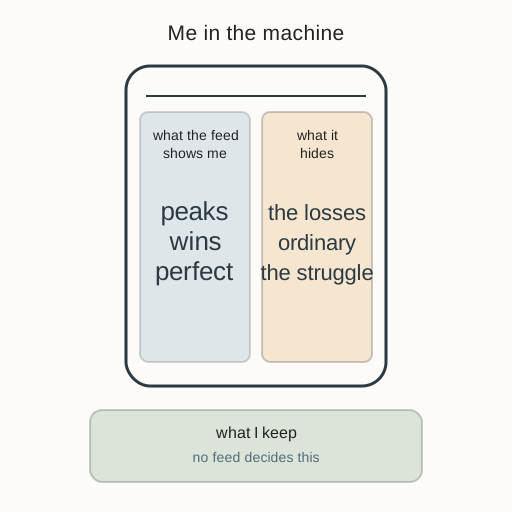
- Feed filter frame · 1 per learner A two-column organizer — what the feed shows me / what it hides — plus a 'what I keep' space for the parts of self no feed decides
- Feed scenario cards · 1 set per pair Four short scenarios about how a feed or platform can shape self-image (curated highlight reels, comparison, engagement bait, targeted ads that assume who you are)
Low-tech / no-cost
- Paper and pencil To draw the filter frame and write the 'what I keep' list by hand
Enriched / lab & device
- One page on social media and adolescent self-image · 1 per pair A plain-language summary of balanced evidence on how curated feeds can both connect and distort self-image, to ground the analysis
Works in different contexts
- large-group Analyze one scenario whole-class, then pairs each take a second and share what the feed hid
- multi-age Younger learners name one thing a feed made them want; older learners analyze the mechanism (curation, comparison) and write the 'what I keep' list
- self-directed A learner works the frame alone, lists what their own feeds show and hide, and writes one rule for keeping authorship
- level-grouped A ready group also analyzes how comparison-based self-worth differs from self-compassion, and which is more durable
- outdoor-only A screen-free version — name the feeds in life (rumor, advertising, expectations) and sort what they show vs. hide
Lesson 9 — Me in the Machine
Summary
Learners examine how technological forces — algorithms, curated feeds, and social comparison — quietly shape self-image, and how to keep authorship of identity inside that machinery. They name what the feed shows and what it hides, notice how comparison-based self-worth works (and why it is fragile), and write a “what I keep” list: the parts of self no algorithm decides.
Objectives
- Explain how they author their identity within technological forces rather than being defined by them. (D01.S2.12.02)
Connection
The feed knows you — or it behaves as if it does. It learns which images hold your eyes, which posts make you stay, which versions of other people make you feel behind. None of this is neutral: a feed that shows you only others’ best moments quietly teaches you that your ordinary life is failing. Adolescence is exactly when these habits and self-images are forming (WHO, S-311), which is why the question is not “get off your phone” — it is who is writing the story of you, and how do you keep the pen?
Materials
- Feed filter frame
- Feed scenario cards
- Paper and pencil (low-tech)
- Social-media and self-image page (enriched)
Preparation
- Copy or draw the feed filter frame; prepare the scenario cards.
- Retrieval: from Lesson 8, authorship vs. inheritance; from Grade 10 (D01.S1.10.02), how technology and media influence emotional life. Today we apply authorship to the algorithm.
- Prepare plain definitions (model once: Kirschner, Sweller & Clark, S-011): an algorithm is a rule the platform uses to choose what to show you; curation is that selecting-and-hiding at work; comparison is measuring yourself against what you are shown. Distinguish self-worth built on comparison (fragile, depends on being “better than”) from self-compassion (kindness toward yourself that does not depend on ranking) (Neff, S-222).
Facilitator note
This lesson is written to the learner (“you”). The idea to land: the feed curates and hides, and comparison-based self-worth is fragile — authorship means deciding what you keep, not being defined by what you are shown. The evidence is balanced and hedged: curated, edited images can distort self-image; social media can both lift (connection, creativity) and weigh down (comparison, disrupted sleep); adolescence is a formative time for these habits (WHO, S-311). Self-compassion is offered as a durable alternative to comparison-based self-evaluation, as description, not moralizing (Neff, S-222).
The ethics lens: platforms profit from holding attention, and whether that is fair to a forming self is an ethical question. The egalitarianism lens: whose image is glorified and whose is invisibilized in feeds is not even; and access to technology is itself uneven (the digital divide), so “just log off” is not equally available advice. The global lens: feeds differ by region, language, and market — the “default” feed is no one’s universal. The technology lens: this is the technology lens made personal — the effect of the machine on the human. The critical-thinking lens: the filter frame is a media-literacy check: what is shown, what is hidden, who benefits?
Safeguarding: no learner is required to reveal their actual screen time, accounts, or body image. Keep analysis on the scenarios and the mechanism, not on learners’ private feeds.
Procedure
- Recall (5 min). From Lesson 8: what is the difference between inheriting and authoring? Today we author inside a machine.
- Meet the filter (10 min). Work a model example (S-011): a feed that shows only athletes’ best plays, everyone’s vacation, everyone’s acceptance letters. What does it show? (peak moments.) What does it hide? (the losses, the ordinary days, the struggle.) What does that hiding teach you about yourself? (that your ordinary life is failing.)
- Analyze a scenario (12 min). In pairs, take a scenario card. Fill the frame: what the feed shows, what it hides, and how that shapes self-image.
- Notice comparison (8 min). Argue briefly: why is self-worth built on comparison fragile? What would self-compassion offer instead — and why is it more durable?
- Write “what I keep” (10 min). List the parts of you no feed decides — a relationship, a skill, a value, a way of seeing. Then write one rule for keeping authorship (e.g., “I follow things that make me more, not less”).
- Close (5 min). Say, in one sentence, who writes the story of you — and how you keep the pen.
Differentiation
- Support: Name one thing a feed shows and one it hides, and write one thing you keep.
- Extension: Audit your own feed for one day (optional, private) and list what it shows vs. hides, then propose one concrete change and its predicted effect.
Assessment
- Formative (peer + self): Can the learner name what a feed shows and hides, explain why comparison-based self-worth is fragile, and write a genuine “what I keep” list with a rule?
- Portfolio artifact (unit): The completed feed filter frame, kept in the capstone journal (feeds Lesson 10).
Home connection
With someone at home, compare what you each notice a feed or advertisement assumes about you. Write one sentence on the difference.
Resources
- On adolescence as a formative time for social and emotional habits (balanced, hedged): WHO, Mental Health of Adolescents (S-311).
- On self-compassion vs. comparison-based self-worth: Neff, Self-Compassion (S-222).
- On worked examples: Kirschner, Sweller & Clark (2006) (S-011); on spaced retrieval: Dunlosky et al. (2013) (S-039).